
Your shopping cart is empty!
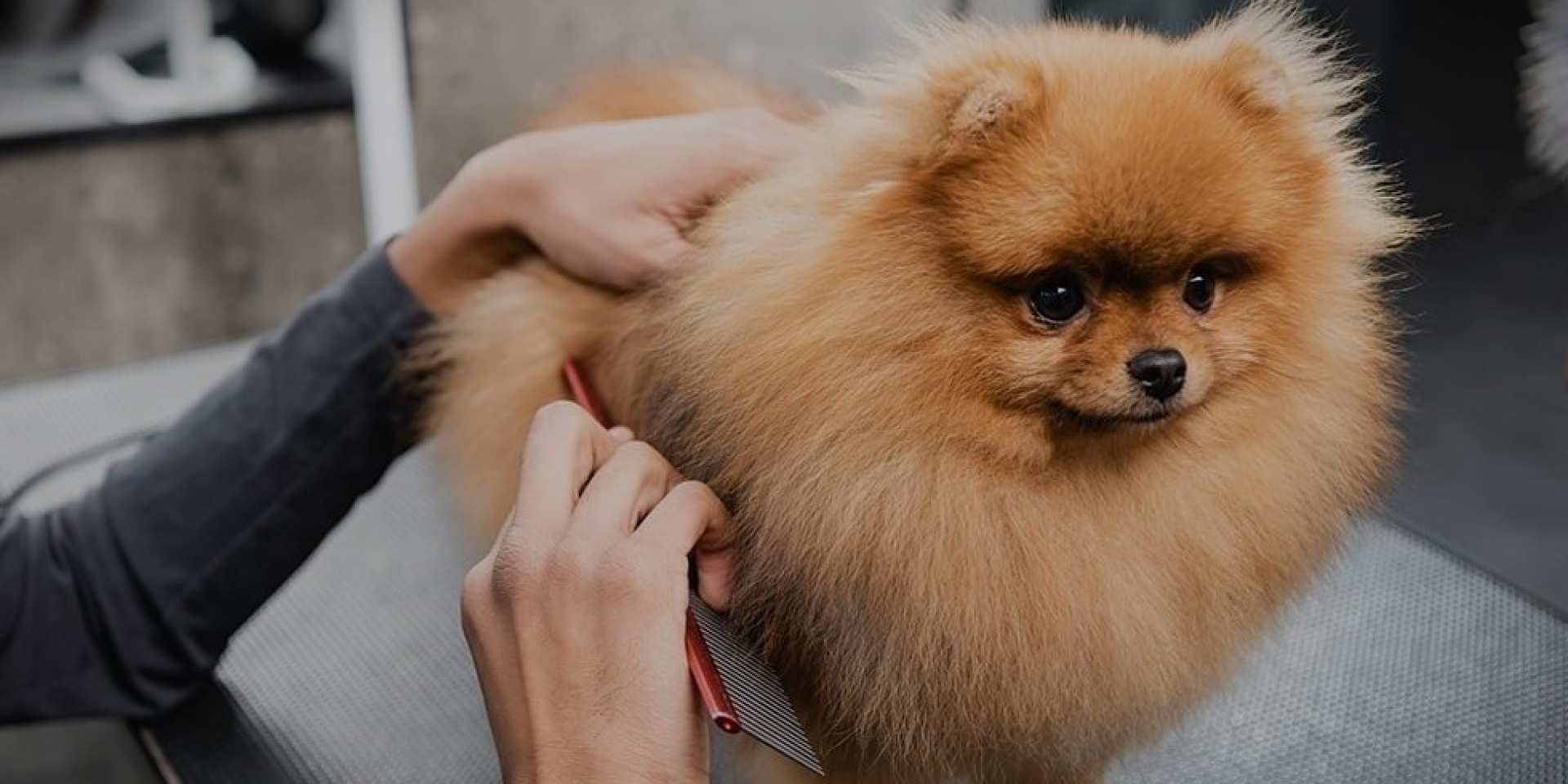
Pomeranian Coat Care: How to Brush, Bathe and Wash Your Fluffy Ball at Home
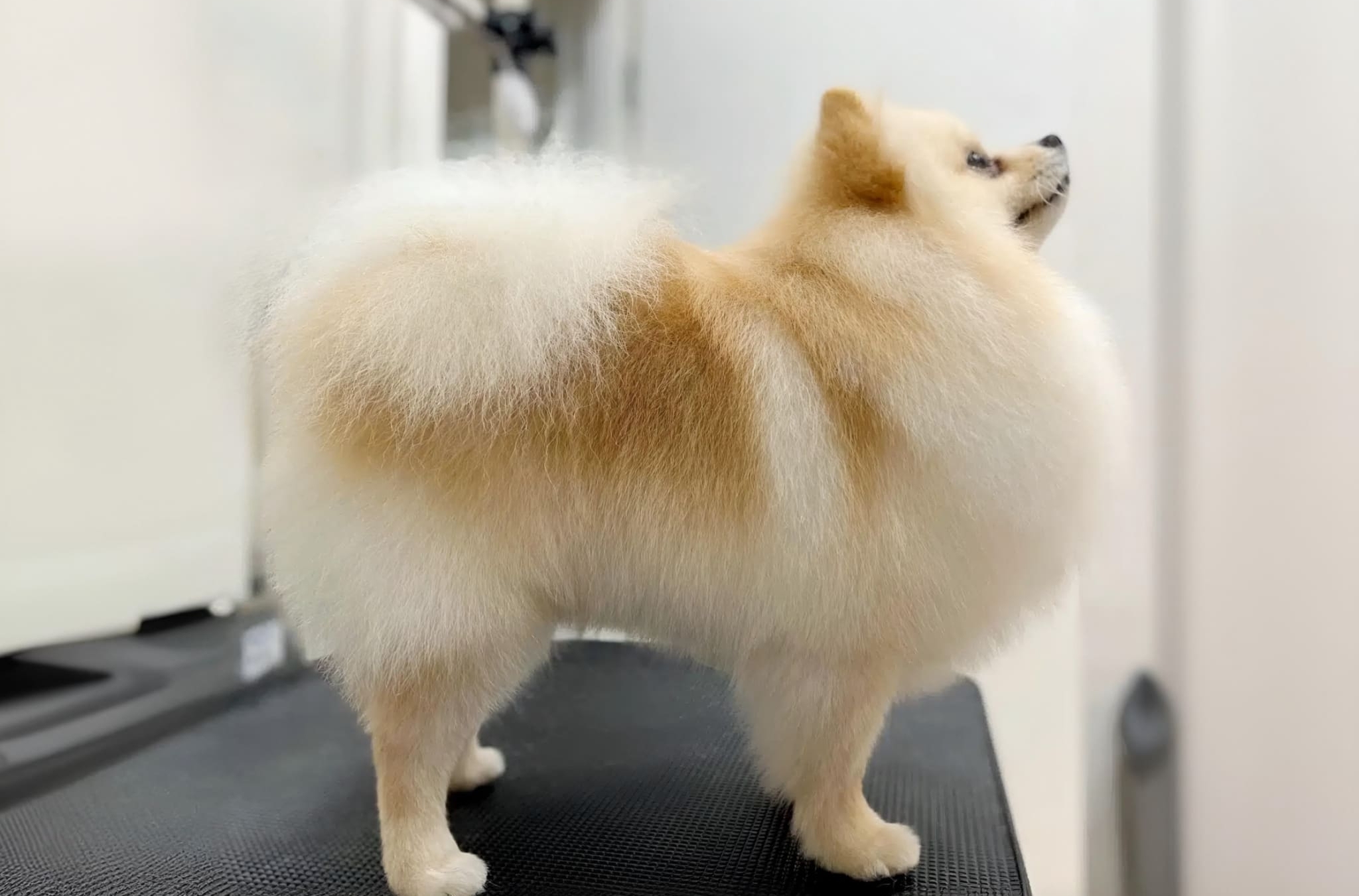
If you own a Pomeranian — congratulations: you've chosen the most popular breed in Ukraine. According to the Cynological Union of Ukraine, the Pomeranian ranked first among all registered breeds in 2025. But along with all that fluffy beauty comes real responsibility: this coat requires consistent, knowledgeable care.
Without it, the delicate double undercoat quickly turns into a solid mass of matts, causing the dog visible discomfort. The good news: proper Pomeranian coat care at home is not complicated. All it takes is the right technique and a few key products.
TL;DR: Pomeranians need brushing 3–4 times a week (daily during shedding), bathing every 3–6 weeks with a gentle strengthening shampoo. A detangling spray is essential, not optional — brushing a dry coat is the #1 thing that damages Pomeranian fur. According to KSU data (2025), the Pomeranian has been Ukraine's #1 breed for the third year in a row.
Why Is a Pomeranian's Coat Special? Understanding the Structure
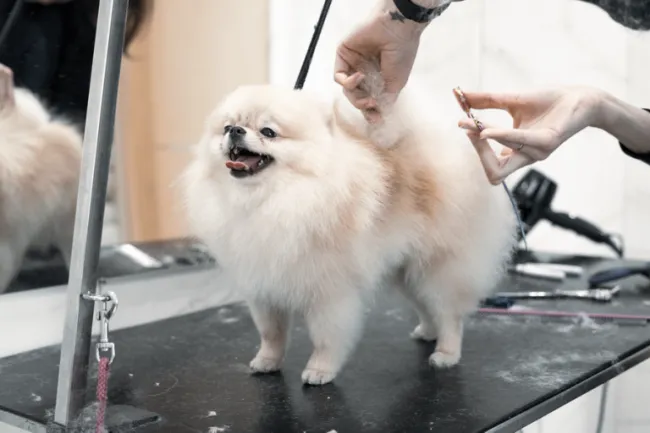
A Pomeranian's coat consists of two distinct layers with different functions. The outer guard coat is stiff and straight, repelling water and dirt. The lower undercoat is soft and dense, insulating the dog in winter and protecting it from overheating in summer.
This "two-level" structure is exactly what gives the Pomeranian its iconic fluffy ball shape. It is also why matts form: the undercoat felts from the inside, invisibly — and by the time you notice it on the surface, the problem is already serious.
Common mistake: only brushing the outer layer. The brush glides over the guard coat and the owner assumes everything is fine — while the undercoat underneath may already be matted into felt.
Another key feature: Pomeranians shed heavily twice a year, in spring and autumn. During these periods, the undercoat comes out in large clumps, and without daily brushing, dense matts can form within just a few days. Outside of shedding season, there is also a lighter, continuous background hair loss year-round.
How to Brush a Pomeranian Correctly: Technique, Tools and Frequency
Brushing a Pomeranian is not simply "running a brush from head to tail." It is layer-by-layer work through the undercoat that takes anywhere from 15 to 40 minutes, depending on coat condition and the owner's experience.
Which Tools You Need
Proper grooming requires three tools. A slicker brush with fine metal pins — the primary tool for working through the undercoat. A metal comb with both fine and wide teeth — for checking results and working sensitive areas. A bristle massage brush — for the final "styling" and shine.
Brushing Technique: Layer by Layer, Bottom to Top
Start at the lower part of the body and work upward. Hold the coat with one hand, part a section, and brush from the roots outward — not from the tips. Pay special attention to the areas behind the ears, under the armpits, in the groin, and around the collar — these are where matts form fastest.
Pro tip: Before brushing, mist the coat with a detangling spray. It eliminates static, moisturises each hair strand, and allows the comb to pass through the undercoat without tearing or causing pain.
We recommend: Puramur Express Hair Protector Fluid Spray — specially formulated for effortless detangling of any coat type. Evening primrose and marula oils nourish each hair strand, while hydrolysed keratin and silk proteins protect the coat structure from damage during brushing. Eliminates static — particularly important for the Pomeranian's fluffy coat. Apply to dry or slightly damp fur before every brushing session.
How Often to Brush
During normal periods, 3–4 brushing sessions per week are sufficient. During seasonal shedding, brush daily — otherwise the loosening undercoat will matt into dense clumps within 2–3 days. After every bath, brushing is mandatory — do it before the coat fully dries, while it's still easy to work through.
How to Bathe a Pomeranian: Temperature, Technique and Drying
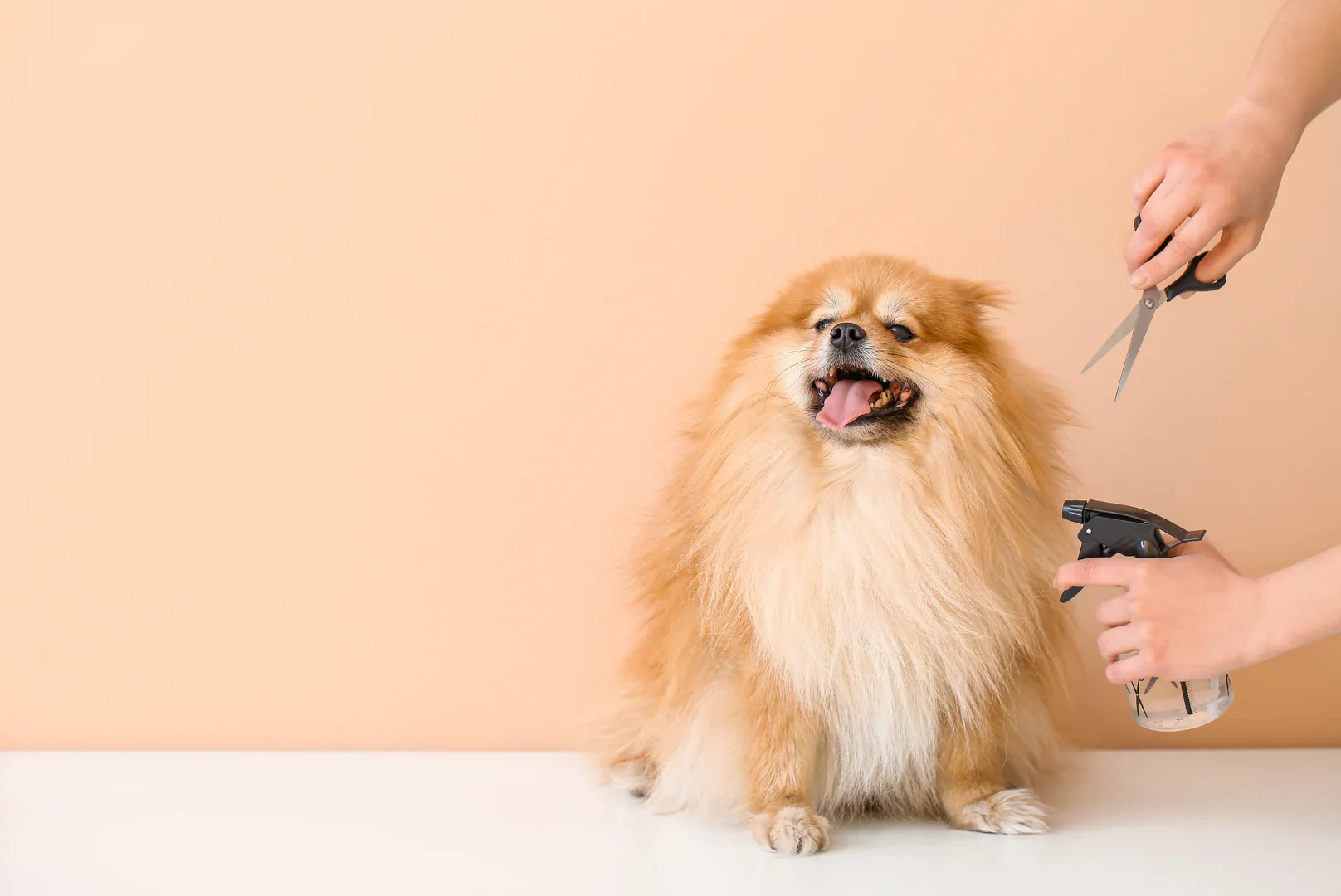
Pomeranians should be bathed less frequently than you might expect: once every 3–6 weeks for a dog that lives indoors. Frequent bathing strips the skin's natural lipid barrier, disrupts the microflora, and causes dryness and dandruff. If the dog gets dirty between baths, spot-cleaning or a dry shampoo is enough.
Preparation Before Bathing
Always brush the Pomeranian fully before getting it wet. Wet coat with existing matts will felt into solid, unsalvageable knots as it dries — and you'll have to cut them out. This is the #1 rule that almost every beginner ignores.
The Bathing Process
Water temperature: 36–38°C — warm, not hot. Apply shampoo to wet fur, lather thoroughly and work it through to the roots. Rinse for a long time — shampoo residue on the skin causes dandruff and itching. After shampooing, apply a conditioner or balm, leave for 2–3 minutes, then rinse out.
We recommend: Puramur Vitality Complex & Vitamin B Shampoo — a strengthening shampoo for gentle cleansing in cases of damaged or excessively shedding coats. B vitamins, D-panthenol and sea algae strengthen hair follicles, stimulate growth and restore the coat structure. Anti-static effect — especially valuable for the Pomeranian's fluffy coat. Makes the next brushing session noticeably easier.
Drying — a Separate Step
After the bath, gently blot with a towel — do not rub, only press. Then blow-dry on a medium heat setting, brushing the coat with a slicker brush against the airflow. This is the step where the iconic fluffy "ball" shape is formed. Dry completely — moisture left in the undercoat leads to fungal skin problems.
Finishing Care: What to Do After Brushing and Bathing
To maintain the coat between baths and after every brushing session, a leave-in finishing spray is an indispensable tool. It protects each hair strand from dust, static and UV exposure, seals in moisture and adds shine.
For the finishing touch: Puramur Keratin & Ceramide Finishing Spray — forms a protective barrier on the coat surface that repels dirt and dust. Aloe vera juice, cornflower extract and ceramides maintain moisture balance, leaving the coat soft and manageable. Delivers a "diamond" shine without weighing the coat down. Apply to dry fur from a distance of 10–20 cm.
Matts: How to Remove Them and What You Should Never Do
If a matt has already formed, work through it gradually. Apply a leave-in conditioner or detangling spray directly to the matt and let it soak in for 2–3 minutes. Then begin separating with your fingers from the tips inward — not from the roots outward — and only then reach for the comb.
Never do this: do not drag a comb through a dry matt by force — it is painful and breaks the hair. Do not wet an already felted matt — water will compact it further. If a matt is very dense, carefully cut it out rather than traumatise the dog.
Frequently Asked Questions (FAQ)
How often should I bathe my Pomeranian?
For an indoor Pomeranian that goes for regular walks, once every 3–6 weeks is optimal. The dog's skin is covered by a lipid layer that protects against pathogens and maintains hydration. Bathing more frequently than once every 3 weeks destroys this layer, causing dryness and dandruff.
Why does my Pomeranian shed so much?
Pomeranians have a double coat — an outer guard layer and a dense undercoat. Twice a year (spring and autumn) the undercoat sheds completely. During these periods, shedding is particularly intense and can last 3–6 weeks. Regular brushing with a slicker brush speeds up the process and prevents matting.
Should I trim my Pomeranian?
Pomeranians should never be shaved down to the skin — it permanently disrupts the coat's natural thermoregulation. Hygiene trimming (paws, belly, the area around the anus) is done every 4–6 weeks. Shape corrections at a groomer are optional, typically 2–4 times a year.
What brush is best for a Pomeranian?
The primary tool is a slicker brush with fine metal pins for working through the undercoat. For checking results and working sensitive zones — a metal comb with both fine and wide teeth. For final styling — a bristle massage brush. All three together make up the complete home grooming kit.
What if my Pomeranian refuses to be brushed?
Start getting your dog used to brushing from puppyhood, when the coat is still short and the process is painless. Always begin with the least sensitive areas (back, sides). Use a detangling spray — it removes uncomfortable sensations. Reward generously with praise and treats after every session.
Summary: The Essential Home Grooming Kit for a Pomeranian
If you reduce everything to a concrete list, here is what every Pomeranian owner needs for at-home coat care:
- Slicker brush with fine metal pins
- Metal comb (fine + wide teeth)
- Detangling spray — apply before every brushing session
- Gentle strengthening shampoo for bathing
- Leave-in finishing spray — for protection between baths
- Hair dryer with temperature control
A beautifully groomed Pomeranian is not the result of hours at a grooming salon. It's 20–30 minutes of consistent attention at home, plus the right products. Build this routine from the very first weeks — and your fluffy ball will always look flawless.
For more guidance on choosing the right grooming products, visit our article How to Choose a Shampoo for Your Pet: A Guide for Caring Owners.