
Your shopping cart is empty!
Pet Hair Everywhere — on the Couch, Your Clothes, and in Your Soup. Here's Why It Happens and How to Stop It
You just went over the couch with a lint roller — and an hour later there's another layer of fur. Sound familiar? It's not because your pet is unusually hairy or because you're not cleaning well enough. It's biology. According to Dogster (2026), allergies to pet hair and dander affect 10–20% of the world's population — and even in homes without pets, a detectable level of allergens is present in 90% of cases.
The good news: you can reduce shedding by 60–70% without rehoming your pet or vacuuming every day. The bad news: most owners use the wrong tools or brush their pets too infrequently. And sometimes heavy shedding isn't "just the season" — it's a signal to see a vet.
This article covers the physiology of shedding in plain language, a ranking of the heaviest-shedding dog and cat breeds, 7 proven ways to reduce pet hair at home, and clear criteria for "when you definitely need a vet."
In short: Shedding is triggered by changes in daylight hours, not temperature — which is why it peaks in spring and fall. Brushing with an undercoat tool 1–2 times a week can reduce the amount of hair in your home by 60–70%. Patchy hair loss means a vet visit, not more brushing (Merck Veterinary Manual, 2024).
Why Do Pets Shed — and Is It Really Normal?
Shedding is a physiological process of coat renewal regulated by hormones and daylight duration. In dogs and cats with a double coat, the cycle takes 4–8 weeks, while cats living indoors under artificial lighting may shed year-round — with no distinct "peaks".
It's important to understand the difference between two coat types:
- Double coat (German Shepherd, Husky, Labrador, Maine Coon): a dense undercoat beneath the protective guard hair. Twice a year it "explodes" — seasonal shedding. Moderate shedding continues throughout the rest of the year.
- Single coat (Yorkshire Terrier, Poodle, Siamese cat): no undercoat. Hair falls out evenly throughout the year, with no distinct seasonal spikes.
What triggers shedding? Not temperature — but the photoperiod, meaning the length of the day. When days start getting longer (spring) or shorter (fall), this affects hormone levels and triggers a coat change. That's why outdoor pets shed strictly by season, while indoor cats under artificial light shed almost constantly.
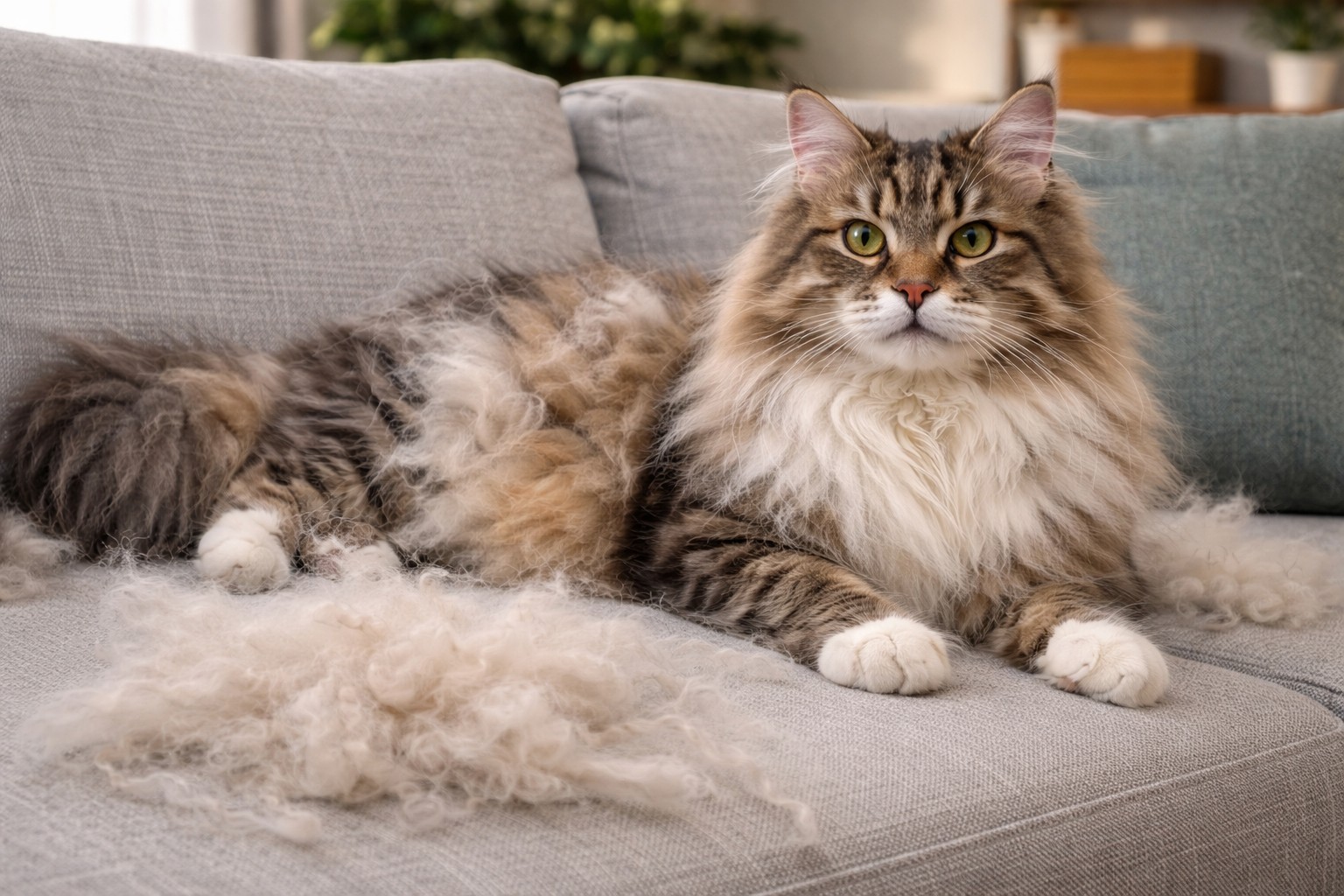
Why "endless" shedding in indoor cats is about light, not breed: Cats that live 24/7 under artificial lighting never "see" the difference between seasons. Their photoperiodic signal never changes — so the body never switches into seasonal coat-replacement mode, and hair just falls out little by little all the time. The fix: more natural daylight.
Shedding is renewal, not loss. Over the course of a year, a medium-sized double-coated dog can shed several hundred grams of fur during seasonal coat changes alone. It's not a pathology — it's a genetically programmed process. But it can be managed.
Shedding in dogs and cats is triggered by changes in daylight hours, not temperature. The coat renewal cycle in double-coated breeds takes 4–8 weeks and occurs twice a year; in indoor cats without access to natural light — practically continuously. Understanding this mechanism is the key to managing shedding effectively.
When Is Shedding at Its Worst — and Why Spring Is No Coincidence
Spring shedding is the most intense of the two seasonal peaks. When daylight hours start to lengthen, the body receives a signal that "winter is over" and triggers the replacement of the thick winter undercoat with a lighter summer one. This process can take several weeks and produce real "snowstorms" of undercoat — especially in Huskies, Samoyeds, and Labradors.
Fall shedding works differently: the summer coat is replaced by a winter one, but this process is shorter and less dramatic — because the winter undercoat grows in gradually rather than "flying out" all at once. Outdoor pets feel the season more acutely; indoor pets with limited window access shed more evenly throughout the year.
Want a simple trick? Start brushing your pet intensively 2–3 weeks before the traditional peak — in late February and in August. This won't prevent shedding, but the hair will end up on the brush instead of on your sweater.
Which Breeds Leave the Most Hair
The volume of shedding depends on coat type and breed genetics — and the difference between the "champions" and the "light shedders" is enormous. A German Shepherd, Husky, or Samoyed produces many times more hair than a Toy Poodle or Cornish Rex of the same weight. Here is a summary ranking for dogs by intensity — from the most "generous" (Wisdom Panel, 2024).
Among cats, the undisputed shedding leaders are Persians, Maine Coons, Norwegian Forest Cats, and Ragdolls. Persians shed year-round due to their extremely dense long coat; Maine Coons have two pronounced seasonal peaks. An interesting case is the Siberian cat: it sheds heavily but contains less Fel d 1 (the allergen protein), which is why some allergy sufferers tolerate it better.
7 Ways to Reduce Pet Hair at Home — and They Actually Work
Cutting the amount of pet hair in your home by 60–70% is achievable without daily vacuuming. An undercoat removal tool used 1–2 times a week can remove up to 90% of loose dead undercoat before it settles on your sofa (FURminator, 2024). Add omega-3 nutrition and a bathing routine — and you'll notice a difference within 3–4 weeks.
1. Regular brushing. Frequency depends on coat type: long and double coat — 3–5 times a week; medium — 2–3 times; short smooth — once a week. During seasonal peaks, double the frequency. Brush all the way down to the skin, not just along the surface — the undercoat lives at the bottom.
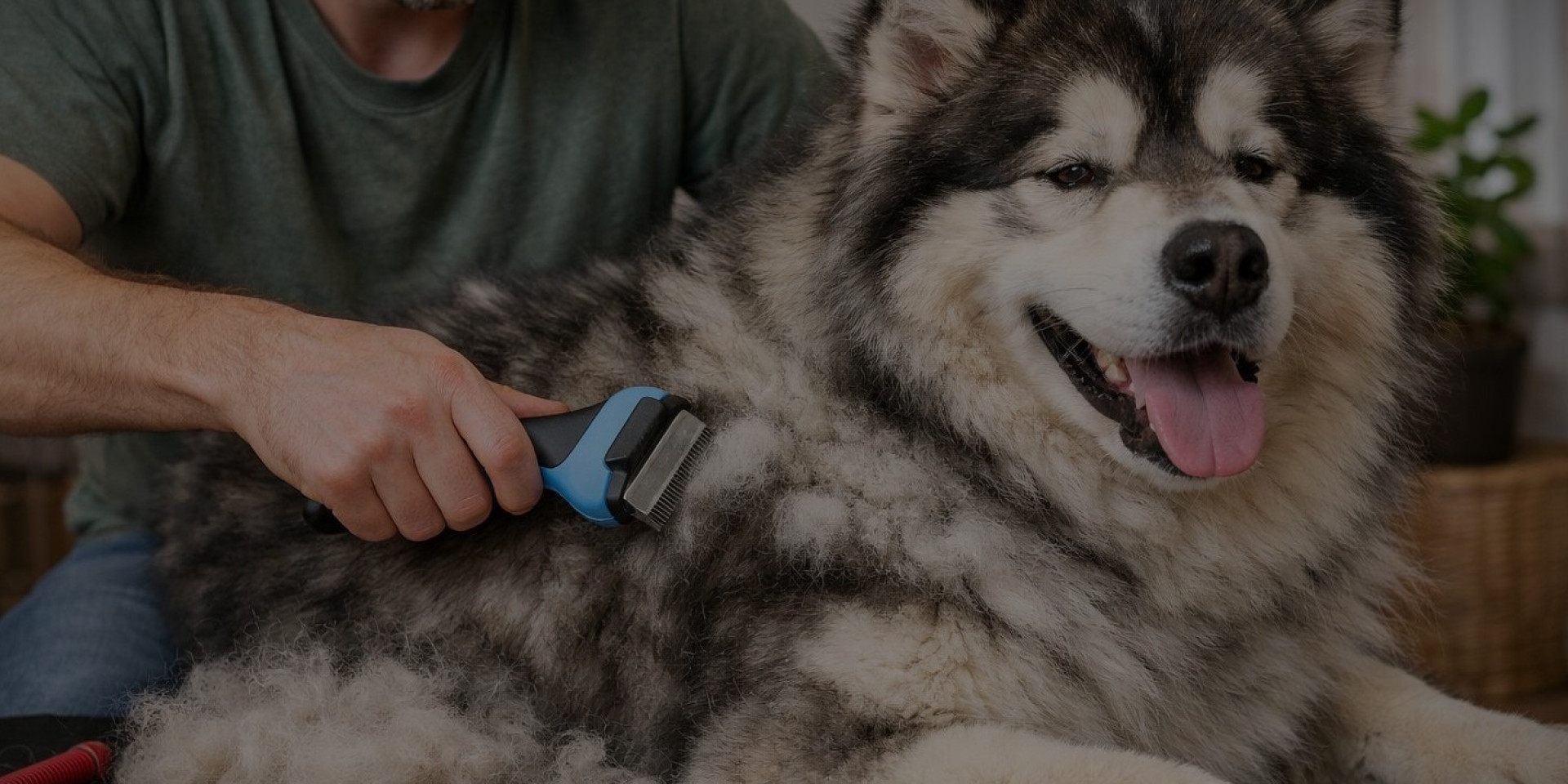
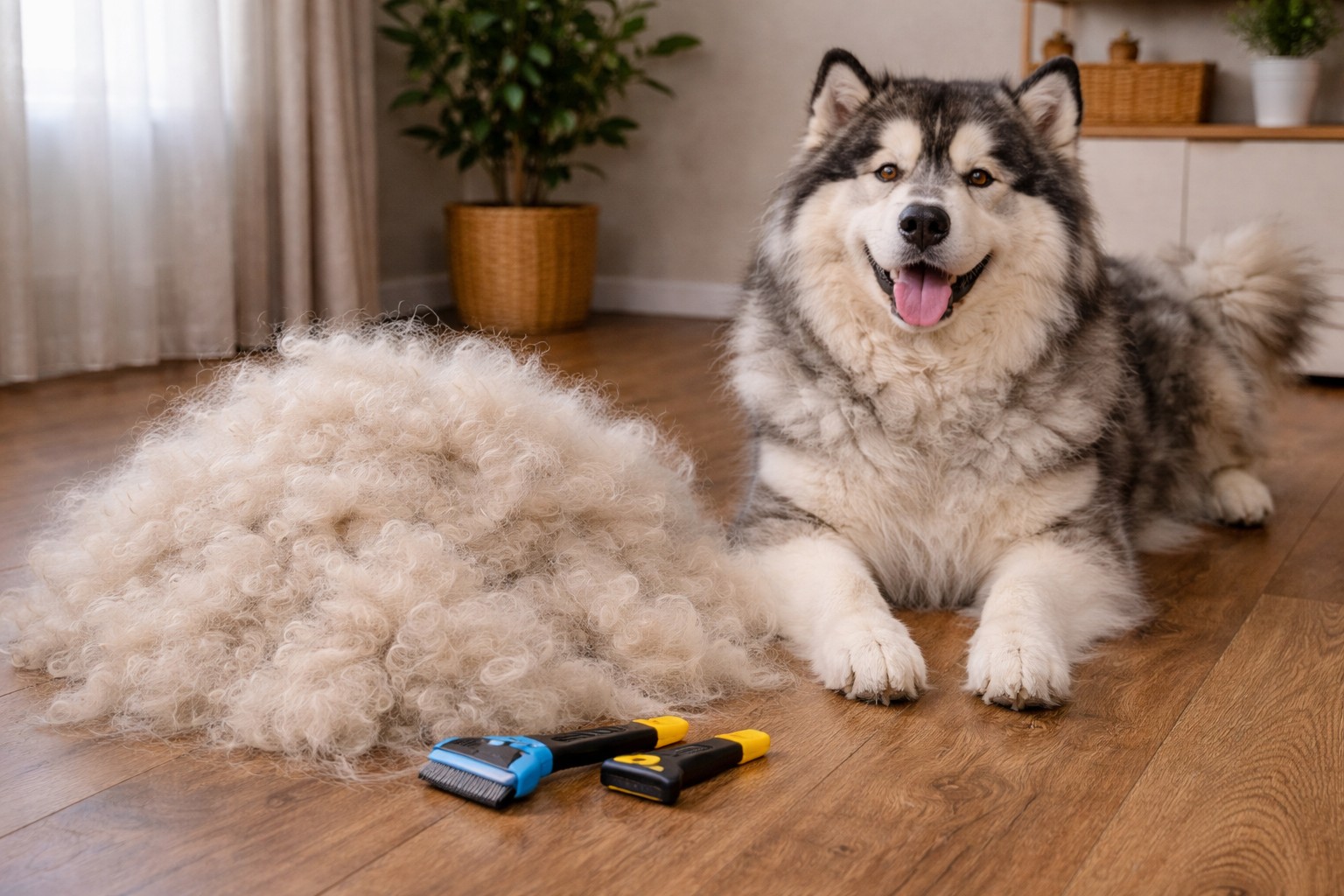
2. Undercoat removal tools. A slicker brush is great for daily maintenance. For seasonal shedding, you need a dedicated angled-tooth tool (a FURminator or equivalent): it penetrates through the guard hair and pulls out dead undercoat without cutting the live coat. These are not the same device.
3. Omega-3 fatty acids — in diet and in grooming. A deficiency in fatty acids is one of the main causes of excessive hair loss. Adding omega-3 to the diet improves the skin's barrier function and, according to several studies, reduces inflammation and excess shedding. Some manufacturers claim up to 70% reduction in shedding — this figure comes from specific supplements, but the effect is confirmed in practice (Dog Food Advisor, 2024). You can complement internal nutrition from the outside: Oil Energy booster by PURAMUR is applied to the coat after bathing and saturates it with nourishing oils — the effect is especially noticeable in breeds with dry, brittle undercoat.
4. Bathing on a schedule. A bath washes away dead undercoat that is still clinging to the fur. Optimal frequency: once a month during calm periods, every 2–3 weeks during peak shedding. After bathing — always blow-dry completely and brush: wet hair tangles and mats. During shedding season, product choice matters too: Vitality Complex & Vitamin B shampoo by PURAMUR strengthens the hair shaft and reduces undercoat breakage. After rinsing, Hyaluronic Protection conditioner restores moisture balance and makes follow-up brushing easier.
5. HEPA vacuum with an upholstery attachment. A regular vacuum often just rolls the hair around. A HEPA filter traps particles from 0.3 microns — meaning hair, dander, and allergens. For a heavily shedding pet, this isn't a luxury — it's a basic necessity.
6. HEPA air purifier. Pet hair becomes airborne with every movement and can stay suspended for hours. A HEPA air purifier in the main room noticeably reduces the amount of airborne particles — and the allergen load.
7. Professional grooming during peak periods. Every 6–8 weeks normally and every 4 weeks in spring and fall — a professional "blow-out" of the undercoat removes what brushing can't reach. After the treatment, shedding at home decreases for 2–3 weeks. To maintain results between visits, Extra Power conditioner by PURAMUR restores coat structure after the blow-out and reduces static — which is what makes hair cling to furniture and clothing.
What owners say: Those who switch to the combination of "deshedding brush twice a week + omega-3 supplement in food" notice less hair on furniture within 3–4 weeks. The most common revelation: they'd been brushing only the surface layer, never reaching the undercoat.
When Shedding Is a Warning Sign, Not Just Seasonal
Patchy hair loss, asymmetrical balding, or sudden heavy shedding outside of season — these are reasons to visit a vet, not pick up a brush. In dogs, the most common medical cause is hypothyroidism; in cats over 8 years old — hyperthyroidism, which affects approximately one in ten senior cats (Merck Veterinary Manual, 2024).
Signs that distinguish illness from seasonal shedding:
- Bald patches or "islands" — normal shedding is even; localized hair loss points to a skin infection, mites, fungus, or hormonal imbalance
- Symmetrical balding on both sides of the body — a characteristic pattern of hypothyroidism and Cushing's disease
- Heavy shedding outside of season + other symptoms — weight changes, lethargy, increased thirst, skin changes
- Hair "breaks off" rather than falling out with the root — a sign of dermatitis or fungal infection
- Cat licks itself to the point of bald spots — stress-related over-grooming (psychogenic alopecia)
On stress and shedding: Stress-related shedding in cats works differently than in dogs. In a dog, the stress hormone cortisol causes hair follicles to enter a resting phase — more hair simply falls out than usual. In a cat, stress often triggers compulsive grooming, which physically wears the fur away. Different causes, similar result.
Veterinary diagnostics for abnormal hair loss include a skin scraping, microscopic hair analysis, and blood tests for thyroid hormones and cortisol. Don't try to guess the cause yourself — it wastes time and leads to "treating" the problem with a brush when it needs medical attention.
How to Remove Pet Hair from the Couch, Your Clothes, and Yes — Your Soup
Let's say you've identified the cause and started brushing more often — but there's still hair everywhere. That's normal: during peak shedding, cleaning isn't a one-time event, it's a routine. Here's what works best.
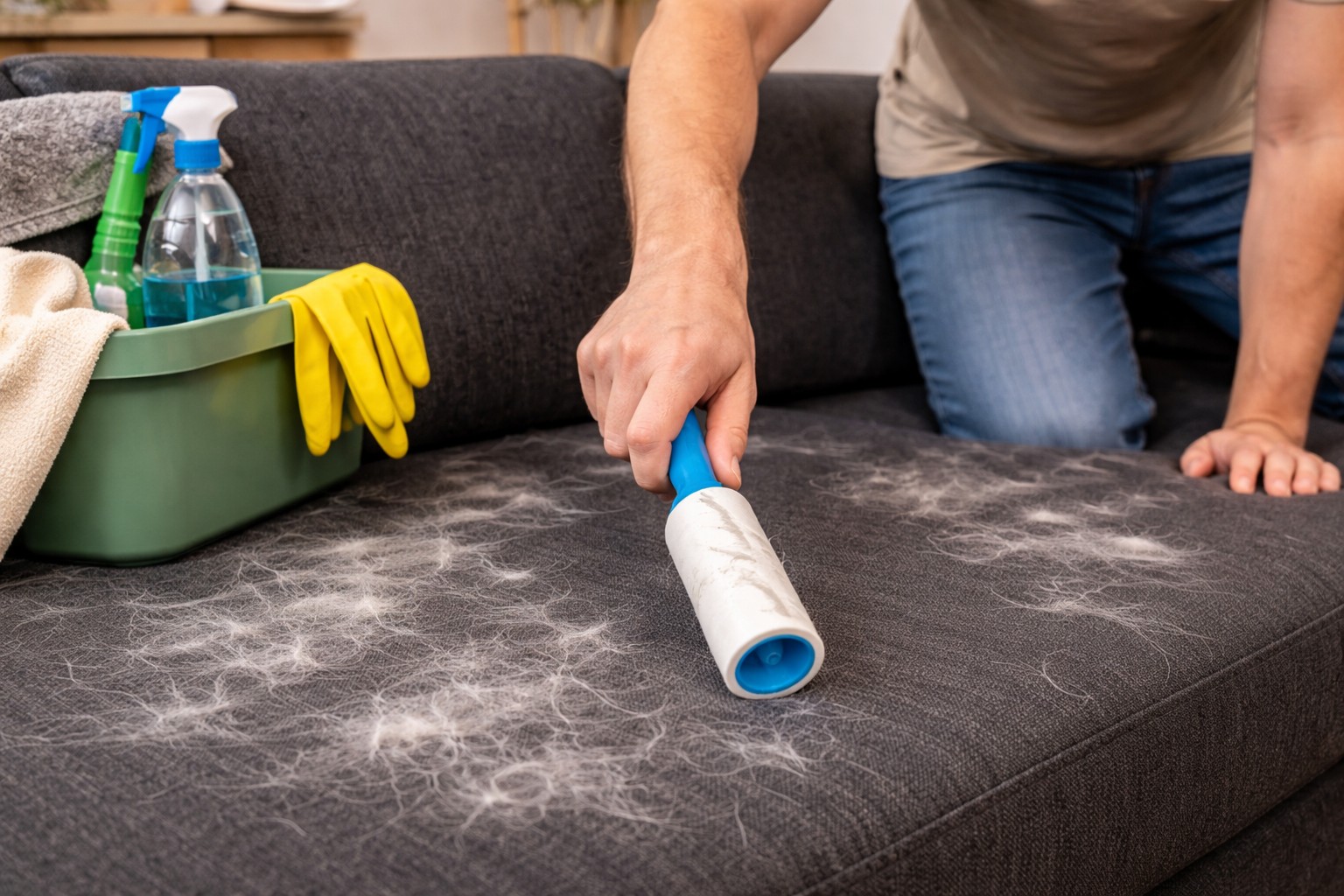
From sofas and armchairs: A rubber glove or a damp palm collects hair from upholstery better than a vacuum — the friction creates static and the hair rolls into clumps. Then vacuum. Removable, washable furniture covers are the simplest long-term solution.
From clothing: A lint roller is standard, but there's a trick. No roller? Tape, a damp hand, or a rubber glove works. Before washing, shake clothes out or put them in the dryer for 10 minutes with no heat: the tumbling knocks hair into the lint trap. Cold washing creates less static — hair won't stick to fabric as much.
From floors: Start with a dust mop or rubber brush that rolls hair into rows. Then vacuum. If you do it the other way around — the airflow from the vacuum scatters the hair.
From the air (and the soup): Pet hair becomes airborne after every movement. A HEPA air purifier in the main room + a lid on the pot — that's already 90% of the solution. And try to keep your pet out of the cooking area while cooking. Though — who's going to explain that to them.
Frequently Asked Questions
Can you completely stop a pet from shedding?
No — and you wouldn't want to: shedding is a normal physiological process. It can be reduced by 60–70% with regular brushing, proper nutrition, and undercoat tools. "Zero shedding" only exists in breeds whose coat structure resembles human hair — Poodles, Yorkshire Terriers, Bedlington Terriers.
Does trimming help reduce hair around the house?
A little — but not as much as you'd think. Short hair still falls out; individual hairs are just less visible. In double-coated dogs, trimming doesn't eliminate undercoat shedding. Far more effective is systematic undercoat brushing with a proper tool, rather than shortening the guard hair.
Why does my cat shed year-round instead of just seasonally?
Because she lives under artificial lighting with no meaningful change in day length. Seasonal shedding is triggered by the photoperiod — when there's no seasonal signal, the cat stays in "constant renewal" mode. More natural daylight and higher indoor humidity reduce the intensity of year-round shedding.
When should shedding send you to the vet?
Immediately — if there is patchy hair loss, symmetrical balding, or hair loss accompanied by skin changes (redness, flaking, odor). This may be hypothyroidism in a dog, hyperthyroidism in a cat, Cushing's disease, dermatitis, or stress. According to the Merck Veterinary Manual (2024), these conditions respond well to treatment when caught early.
Conclusion
Pet hair on the couch isn't a life sentence. It's just biology that needs regular attention. Shedding in a double-coated pet can be reduced by 60–70% if you brush properly twice a week, feed a diet rich in omega-3, and bathe on a schedule — not just before guests arrive.
Key takeaways:
- Shedding is triggered by daylight, not temperature — the spring peak is the most intense
- Brush all the way down to the skin, not just along the surface — the undercoat lives at the bottom
- An undercoat tool ≠ a regular brush: they do different jobs
- Omega-3 in the diet works — but it takes weeks, not days
- Patchy hair loss — vet first, brush second
- Indoor cats shed year-round because they "don't see" the seasons — this is not a disease