
Your shopping cart is empty!
Dog Perfumes: Are They Safe and How to Choose Without Risking Your Dog's Health
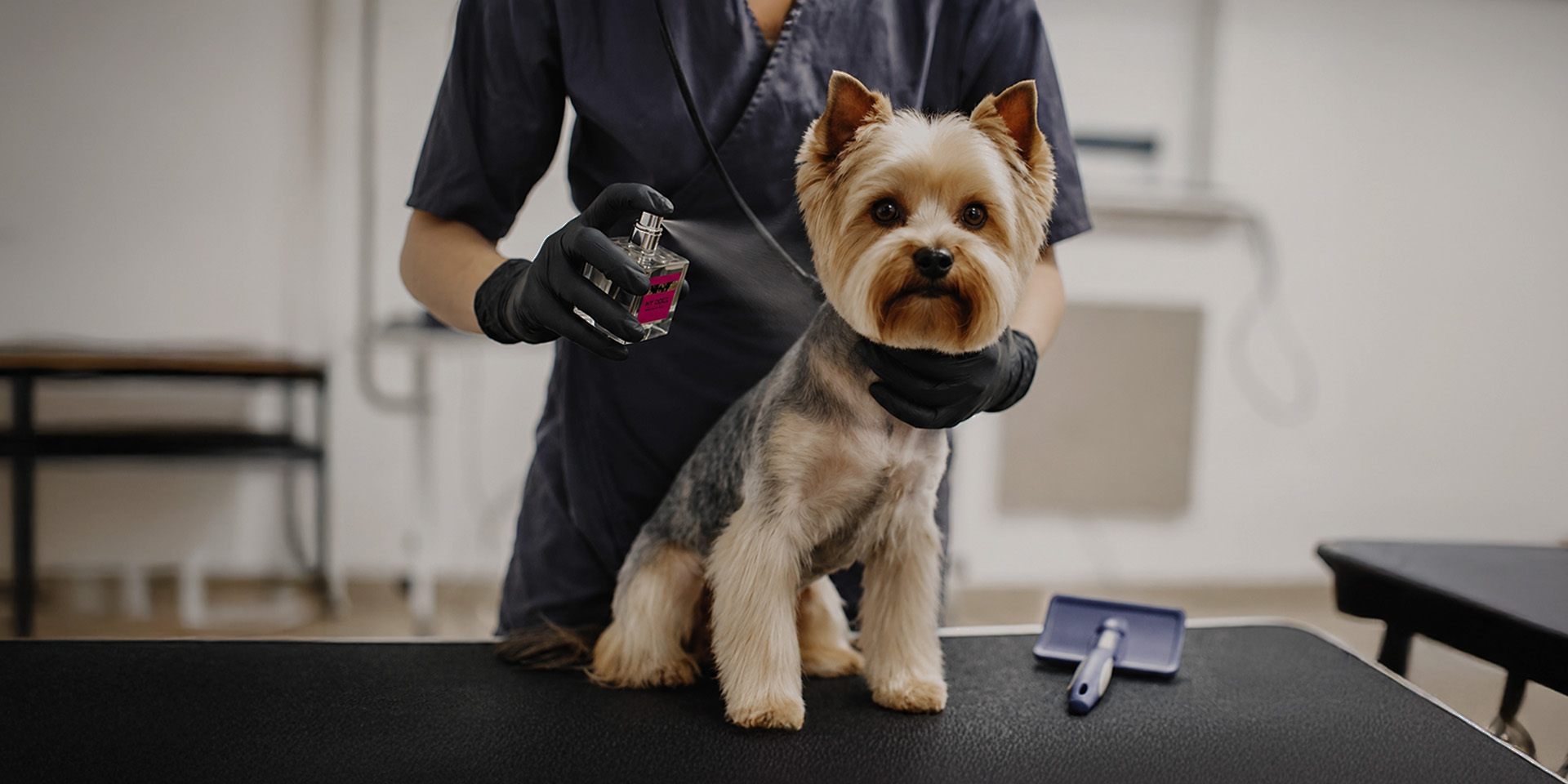
The idea of spritzing your dog after grooming seems innocent — the same gesture of care we do for ourselves. But between human perfume and canine fragrance lies a gap measured in millions of olfactory receptors. Researchers have counted them: dogs have 220 to 300 million compared to 5–6 million in humans, and the brain region processing smells is 40 times larger relative to body size (Jezierski et al., Applied Animal Behaviour Science, 2021). What smells "light" to us can be overwhelming to a dog. And that's before we even discuss the toxicity of components.
Specialized dog perfumes are safe if they contain low fragrance concentrations (1–20%), no essential oils from the ASPCA toxic list, and are applied to the coat (not the skin) from a distance of 20 cm. Human perfumes and concentrated essential oils should never be applied to dogs — 7–8 drops of concentrated tea tree oil can cause serious toxicity.

Why "Are Dog Perfumes Safe" Isn't a Rhetorical Question
The main reason dog perfumes require separate rules is physiological. Dogs don't just "smell things better" — they live in an entirely different olfactory world. Veterinary olfactory specialists at Merck Veterinary Manual note that dogs can distinguish compounds at concentrations down to one part per million — the sensitivity of a laboratory mass spectrometer.
Practical takeaway: a fragrance concentration that seems delicate to us can be oppressive to a dog. This isn't about taste — it's about sensory system overload. A dog can't "turn off" their nose the way a human can close their eyes. Perfume that stays on the coat continues "sounding" to them for hours.
What doesn't make dog perfumes dangerous
Let's immediately dispel three common fears:
- Disinfectants and air fresheners like Febreze. ASPCA Poison Control toxicologists have officially confirmed: household air fresheners don't pose a serious risk to dogs and cats with normal use (ASPCA, 2020).
- Specialized perfumes for animals. Products with fragrance concentrations of 1–20% and no toxic oils in the composition, when applied correctly, don't have a documented poisoning risk.
- Diffusers in an adjacent room. If the dog can leave the room and doesn't have respiratory disease, short-term diffuser use (up to 30 minutes) is considered safe.
Dangerous are specific things: concentrated essential oils, human perfume with high aromatic composition concentration, application to irritated skin, and use in risk groups (puppies, pregnant females, dogs with respiratory issues). Each is covered in detail below.
Dogs have 220 to 300 million olfactory receptors compared to 5–6 million in humans, and the share of the brain responsible for processing smell is 40 times larger relative to human size (Bond Vet, 2024). This means the fragrance perception threshold in a dog is fundamentally different — what a human barely notices can be a strong stimulus to the animal.
What Makes Perfume Dangerous for a Dog: Three Key Factors
The risk isn't in the very fact of applying a fragrance — it's in specific ingredients. Veterinary toxicologists identify three main variables: concentration, type of substance, and route of application.
Factor 1. Concentration of essential oils
One bottle of product may contain "essential oils" in very different doses. In concentrated form (100%), essential oils pose a serious threat — even a few drops on the coat can cause poisoning. In ready-made products for animals, the concentration is usually 1–20%, and with proper use the risk is minimal (ASPCA Poison Control, 2024). The main rule: if there's essential oil in the composition — it must be dissolved in a stable base, not in pure form.
Factor 2. Type of substance in the composition
Not all fragrance components are equal. Here's a short guide based on recommendations from the ASPCA, VCA, and Pet Poison Helpline.
| ⛔ Avoid in dog perfume composition | ✅ Conditionally safe in low concentrations |
|---|---|
| Tea tree oil (melaleuca) Cinnamon oil Peppermint oil Pennyroyal oil Wintergreen oil Pine oil Ylang-ylang oil Citrus oils (limonene) Clove oil |
Chamomile hydrolate Lavender hydrolate (in very low concentration) Lemongrass (not concentrate, fragrance grade) Vanilla (synthetic) Vetiver Atlas cedar Synthetic musks Fruit fragrances (not essences) |
The key mistake owners make is thinking "natural = safe." Essential oils are indeed natural substances, but in concentrated form they are pharmacologically active. According to the ASPCA, 7–8 drops of concentrated tea tree oil can cause serious poisoning in a medium-sized dog. That's the same volume we accidentally drip onto the coat thinking "just a little."
Factor 3. Application route — on coat, not skin
One more physiological detail. Essential oils are lipophilic (fat-soluble), so they rapidly penetrate a dog's skin, enter the bloodstream, and are metabolized in the liver. When applied to a dry coat — they remain on the surface and gradually evaporate. When applied to skin — they are absorbed within hours. That's why the golden rule of pet-safe perfumes: spray onto the coat, don't rub into the skin.
The most common reasons for calls to Pet Poison Helpline about essential oils are tea tree (melaleuca), cinnamon, citrus, peppermint, pennyroyal, wintergreen, pine, and ylang-ylang (Pet Poison Helpline, 2020). These components shouldn't appear in dog perfume in noticeable concentrations — no matter how "natural" the product is marketed.
What Happens When Human Perfume Is Applied to a Dog
This is the most common practice — and statistically, the riskiest one. Human perfume contains a high concentration of aromatic compositions (eau de parfum 15–20%, eau de toilette 5–15%) plus denatured ethanol — up to 90% of the volume. For humans, this is a normal carrier; for a dog, it's a combination of two irritants at once.
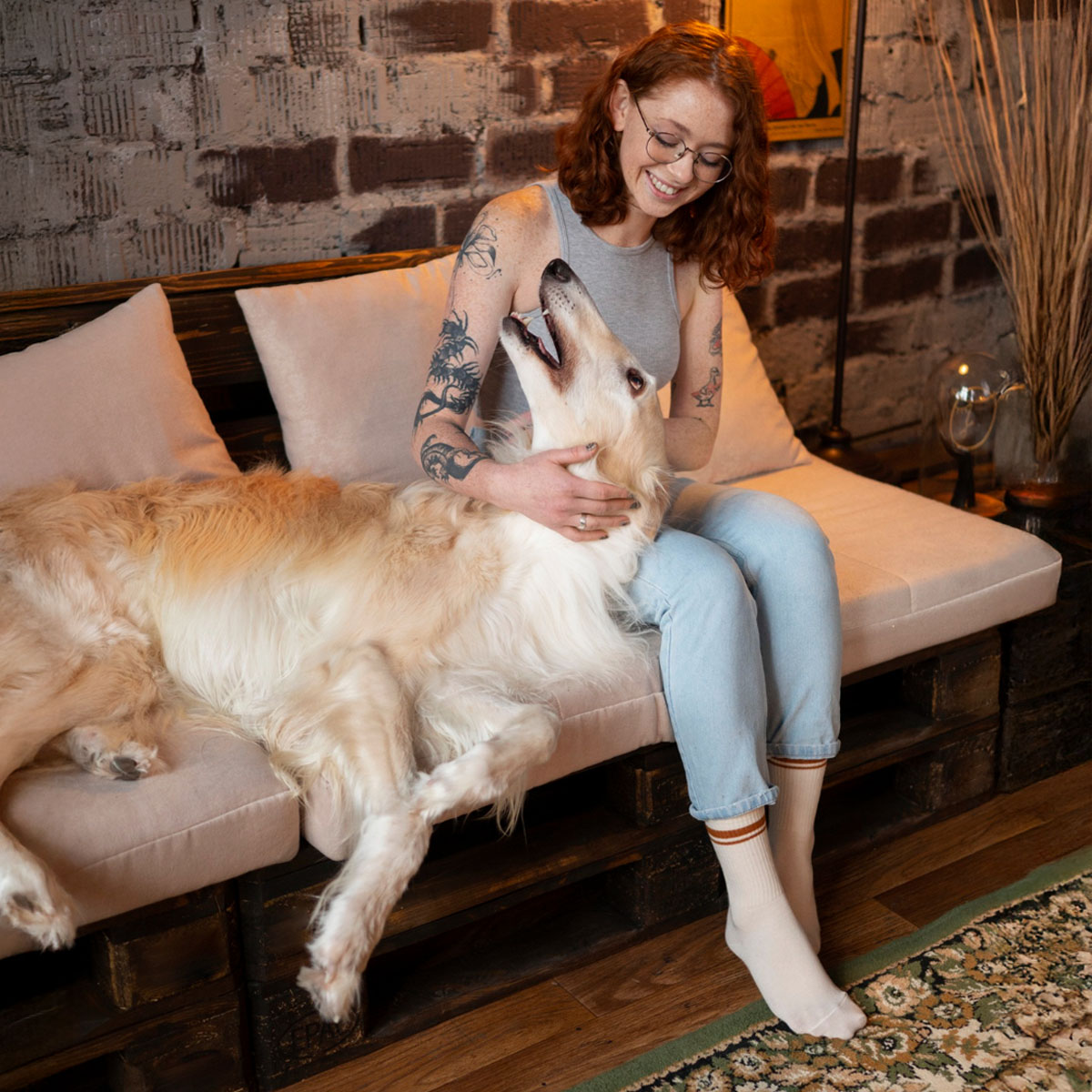
What happens in the first hours after applying human perfume to a dog:
- Minute 0–5. Alcohol evaporates — this cools the skin and can cause a "burning" discomfort, especially on irritated areas.
- Minute 5–30. The dog starts intensely licking the application area. This is a reflex — the animal "washes off" foreign matter. That's how aromatic components end up in the mouth.
- Hour 1–3. If the composition contains toxic essential oils, the first wave of symptoms develops: drooling, vomiting, lethargy, tremor.
- Hour 4–24. In case of severe poisoning: ataxia (loss of coordination), hypothermia, and in severe cases — seizures (VCA Animal Hospitals).
The most important part: the owner often doesn't connect the symptoms to the perfume. It seems the dog "suddenly got sick," when the cause is the aromatic composition on the coat that the animal has been inhaling and licking for the last 12 hours.
How to Choose a Safe Perfume for Your Dog — 5 Practical Criteria
The best perfume for a dog is one specifically designed with these factors in mind. Here's what to look for when choosing.
1. "Pet-safe / for animals" labeling
This is the baseline requirement. A product with such labeling has undergone tolerability testing and has a thought-through concentration. The Aroma Line from PURAMUR features perfumes and perfumed mists designed specifically for dogs and cats — with concentration and composition suitable for application on animal fur.
2. Transparent composition without a toxic list
The label should show the full list of ingredients. Check it for the presence of oils from the prohibited list (see table above). If the composition simply says "parfum" without disclosure — that's not automatic grounds to reject, but a reason to ask the manufacturer.
3. Moderate alcohol concentration
Denatured ethanol is a standard carrier for perfumes. In pet products it may be present, but usually in lower concentration than in human perfumes (compare: up to 90% in human perfume, 50–80% in a typical pet perfume). Products with an "alcohol-free" formulation are optimal for dogs with sensitive skin or dermatitis.
4. Format — spray or mist
A pump dispenser gives an even thin layer and lets you control the amount. Avoid products in the form of a concentrate for drop-by-drop application — this makes it easy to overdose. A perfumed mist is the lightest form — it delivers less aromatic substance per unit area.
5. Species specificity
A perfume suitable for a dog isn't automatically safe for a cat. Cats lack the enzyme glucuronyltransferase, needed to metabolize many aromatic compounds, so they are significantly more sensitive to essential oils (ASPCA Pro). Universal pet perfumes suitable for both dogs and cats are products with intentionally lightweight compositions. For example, in PURAMUR My Soul, the formula is designed for both species, with notes of vanilla, coffee, and white cedar — components that don't appear in the toxic lists for either species.
In ready-made products for animals, the essential oil concentration is typically 1 to 20% — this is exactly the dose considered safe with proper application, unlike concentrated 100% oils (ASPCA Pro, 2024). So "pet-safe" isn't just marketing — it's a specific technological criterion.
How to Apply Perfume to a Dog — 6 Rules
The right application technique is as important as the product choice itself. Here's how experienced groomers do it.
- Shake the bottle before use. Aromatic compositions separate during storage — shaking evens out the concentration.
- Hold at 20 cm from the coat. This is the standard for most Aroma Line sprays. Closer — a spot of product in one place; farther — the spray "flies into the air."
- Apply to the spine and withers area, not the head. This is both safe (further from the muzzle, eyes, ears) and effective: fur holds fragrance longer in this area.
- 1–2 pumps, no more. For a medium-sized dog, this is enough. Remember the difference in olfactory sensitivity.
- Only on dry and clean coat. On damp fur, perfume spreads unevenly; on dirty fur, components interact with contaminants.
- No more than once every 3–5 days. Fragrance lasts longer on fur than on human skin. Daily application is excessive.
Where not to apply: muzzle, ears, paws (the dog licks them), genitals, area under the tail, any spot with irritated skin or dermatitis.
When Dog Perfumes Are Contraindicated
There are situations when even the safest pet-safe product is better set aside. Veterinary toxicologists at Pet Poison Helpline identify six risk groups.
- Puppies under 12 weeks. The liver isn't mature; metabolism of aromatic compounds is slowed. Risk of adverse reactions is higher even at low doses.
- Pregnant or lactating females. Aromatic components can pass into milk; before birth — affect the fetus. Limit to cases of urgent necessity.
- Dogs with dermatitis, eczema, or open wounds. Damaged skin absorbs components many times more actively than healthy skin.
- Dogs with respiratory disease — asthma, chronic bronchitis, tracheal collapse. Aerosol can cause coughing, shortness of breath, and in severe cases — aspiration pneumonia (Pet Poison Helpline).
- Dogs with epilepsy or seizure predisposition. Strong fragrances are a known seizure trigger in sensitive animals.
- Senior dogs with kidney or liver failure. Reduced ability to metabolize compounds means increased risk of cumulative toxicity.
What often goes unmentioned: excessive perfume application — even of a quality pet-safe product — can negatively affect a dog's mental state. An animal whose olfactory receptors are overloaded with a foreign fragrance reads environmental signals worse: doesn't smell other animals, orients less well on walks, may become more anxious. This isn't poisoning, but it's definitely not "care." Moderation is criterion number one.
How to Tell the Perfume "Didn't Suit" Your Dog — 6 Signs
A reaction to an unsuitable product is usually visible within the first 2–12 hours. Here's what to watch for.
- Intense licking of the application area. Once or twice is normal. A dog that won't leave the spot and keeps licking for over 10 minutes is a warning sign.
- Drooling, foam, or vomiting. A sign of oral mucous membrane irritation or the start of a systemic reaction.
- Tremor, ataxia (unsteady gait), muscle weakness. Classic neurological symptoms of essential oil poisoning.
- Itching, redness, skin swelling. Local allergic or irritant reaction.
- Coughing, frequent sneezing, shortness of breath. Respiratory tract reaction — especially dangerous with aspiration risk.
- Avoiding people, hiding, apathy. Behavioral reaction — often the first sign, before physical symptoms appear.
What to do if symptoms appear: thoroughly wash the product from the coat with warm water and a neutral pet shampoo (for example, any basic-care PURAMUR shampoo), ventilate the room, ensure access to clean water. If symptoms don't pass within an hour or worsen — go to the vet. Do not induce vomiting yourself — with essential oil aspiration this worsens the condition.
Symptoms of essential oil poisoning in dogs develop 2 to 12 hours after exposure: drooling, tremor, ataxia, muscle weakness, and in severe cases — hypothermia and collapse (Embrace / Merck Veterinary Manual, 2026). If an owner notices these signs after applying perfume — that's a direct signal to wash the product off and contact a vet.
Frequently Asked Questions About Dog Perfumes
Can dogs wear human perfume?
No. Human perfumes contain a high concentration of aromatic compositions (15–20% in eau de parfum) and denatured ethanol (up to 90%), which together is too active a combination for a dog's skin. In addition, human perfumes don't screen for the presence of components from the dog-toxic essential oil list. Use only specialized pet perfumes.
How long does perfume last on a dog's fur?
From 12 hours to 3 days, depending on coat type and product concentration. Fragrance stays longer on long and dense fur. A perfumed mist is a lightweight form — less durable, but less overpowering. Ready-made Aroma Line perfumes last 1–2 days on medium-length coat.
Will perfume mask "doggy" smell?
Temporarily — yes, but it's not a solution. A persistent unpleasant coat odor is almost always a consequence of delayed bathing, excess sebum, matted fur, or a skin condition. The right answer is bathing with a suitable shampoo and regular brushing. Perfume is the final touch on a clean coat, not a substitute for care.
Can I apply perfume before a dog show?
Yes, provided it's a pet-safe product and the show rules allow it. Many international kennel federations restrict strongly scented substances during judging (to avoid interfering with the judges' work). Check the specific show's rules and, 24 hours before it, apply only light mists rather than concentrated perfumes.
What age can you start using perfume on a dog?
No earlier than 12 weeks (3 months). Before this age, a puppy's liver isn't ready to efficiently metabolize foreign aromatic compounds, and the olfactory system is still forming. From 3 months you can introduce it in the care routine, at minimum dose and only in cases of special need (first show, guests, after grooming). Regular use before 6 months isn't recommended.
Key Takeaways About Dog Perfumes
Dog perfume isn't dangerous by default and isn't unconditionally beneficial. It's a tool that works when chosen properly and applied with an understanding of the animal's physiology. The key thing is not the fact of applying a fragrance — it's the product composition, dose, and the dog's condition.
What to remember:
- A dog's sense of smell is 10,000 – 100,000 times sharper than a human's — what's light to us can be too much for a dog.
- What's dangerous isn't "perfume in general" but specific components: concentrated essential oils of tea tree, cinnamon, mint, citrus, ylang-ylang — and the high aromatic content in human perfumes.
- Specialized pet perfumes (1–20% concentration, no toxic ingredients in the composition, for application on coat, not skin) are safe when used properly.
- Proper application: 20 cm from coat, spine and withers area, 1–2 pumps, no more than once every 3–5 days.
- Risk groups — puppies under 12 weeks, pregnant females, dogs with dermatitis, asthma, epilepsy, or liver/kidney disease.
- Intolerance symptoms appear within 2–12 hours: drooling, tremor, lethargy, itching, coughing.
If you're looking for a pet-safe perfume for your dog — take a look at the Aroma Line from PURAMUR: from the light perfumed mist Spirit with notes of bergamot and jasmine to the refined My Soul with vanilla and white cedar. All line products are designed with exactly the criteria described in this article: moderate concentration, no toxic oils list, for application on coat from a distance of 20 cm. Dog perfume made as care rather than masking — and that's the whole difference.