
Your shopping cart is empty!
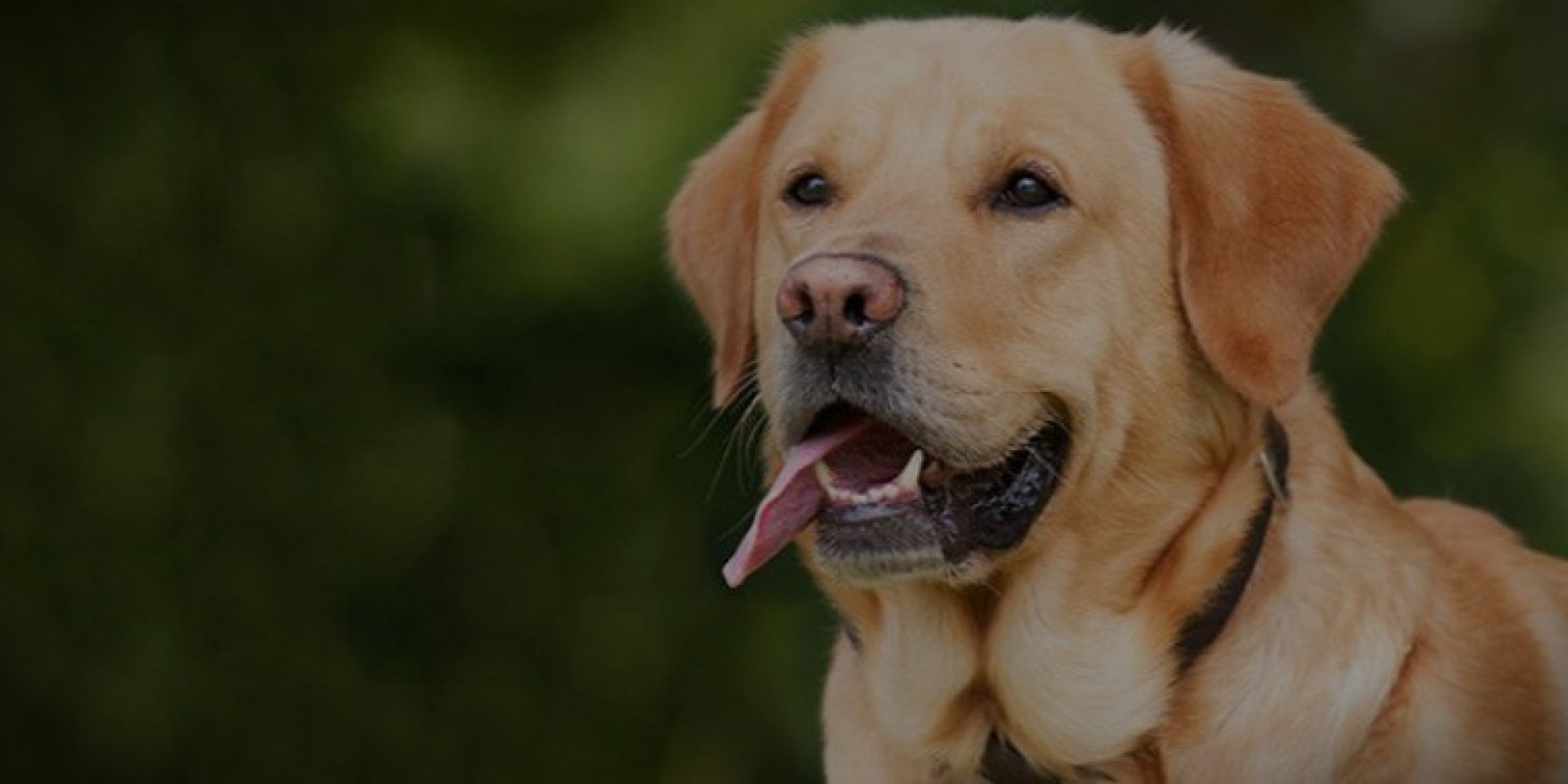
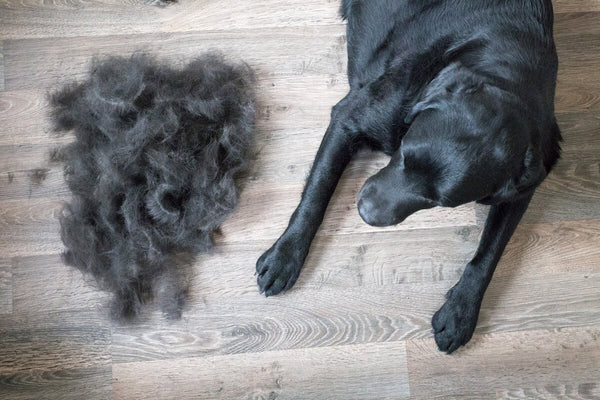
If you own a Labrador, you already know: there is hair everywhere. On the sofa, on the pillows, on your black trousers, floating in the water bowl. And unlike long-haired breeds whose loose strands are immediately visible, Labrador hair — short and stiff — literally embeds itself into fabric and carpets.
This is not a defect and not a health problem. Labradors are genetically programmed to shed daily — their double coat renews itself continuously. But here's the good news: the right grooming routine can cut the amount of hair in your home by at least half. No marathon sessions required — just the right technique and the right products.
A Labrador's coat consists of two layers with distinct functions. The outer guard coat is stiff and dense, repelling water. This is why Labradors can swim for extended periods without becoming completely soaked. The inner undercoat is soft and warm, protecting the dog from cold in winter and from overheating in summer.
Both layers renew themselves constantly. A certain amount of daily hair loss is entirely normal for the breed. Twice a year — in spring and autumn — the undercoat sheds in bulk, making shedding particularly intense during these periods. Without daily brushing, loose undercoat compacts into dense clumps at the roots and scatters around the home even more actively.
The answer depends on the time of year. During normal periods, 2–3 brushing sessions per week are enough to remove dead hair before it ends up on the furniture. During seasonal shedding, brush daily — and ideally outdoors.
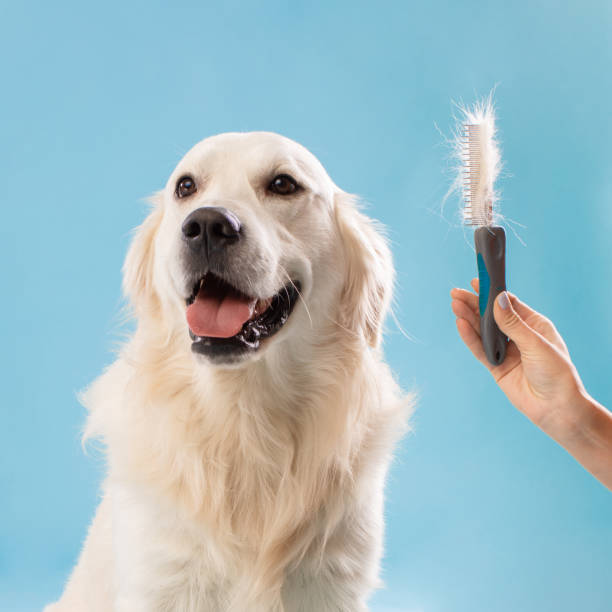
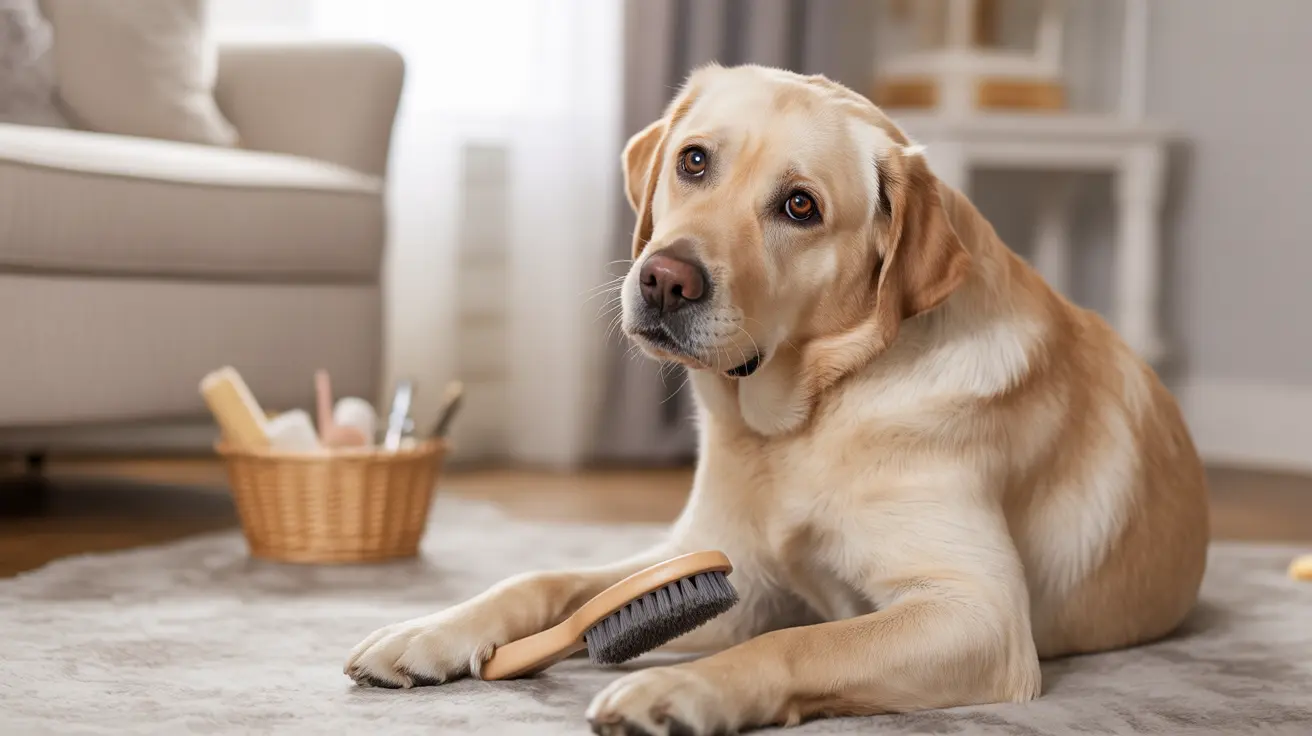
Three tools cover all your Labrador's brushing needs. A rubber brush or grooming glove — for skin massage and collecting loose surface hair. A deshedding tool or furminator — the primary instrument for removing the undercoat. A stiff bristle brush — for the final polish and shine of the guard coat.
Start with the rubber glove or brush — working against the direction of coat growth, from the tail toward the head. This loosens the undercoat and brings it to the surface. Then move to the deshedding tool — short strokes in the direction of growth. No need to press hard: the tool catches the undercoat without force.
Finish with the stiff bristle brush in the direction of growth — it collects any remaining loose hair and gives the coat an even, glossy appearance. Pay extra attention to areas with the densest undercoat: the neck, chest, haunches and tail.
Labradors need bathing less frequently than most owners assume. Once every 4–6 weeks is optimal for an indoor dog. The coat's natural oil layer protects the skin and provides that famous water-repellent quality Retrievers are known for. Frequent bathing destroys this layer — the skin dries out and dandruff and itching follow.
If the Labrador has been in muddy water or a river, rinsing with clean water and no shampoo is enough. A full grooming bath with products is only needed when genuinely necessary.
The golden rule: never bathe an unbrushed Labrador. Water compacts loose dead hair and the undercoat that's in the process of shedding — and once dry, it becomes even more deeply embedded in the coat. Always brush first, then bathe.
Labradors are active dogs. They run, swim and dig. A shampoo for them needs to clean effectively after intense outdoor activity while not drying out the skin or disrupting its natural pH. Concentrated shampoos are a smart choice — less product is needed and they distribute more evenly through a dense coat.
Water temperature: 36–38°C. A Labrador's coat is dense, so saturating it fully takes effort — press your palms into the fur to push the water all the way to the skin. Apply shampoo to wet fur, lather well and leave for 2–3 minutes. Rinse for a long time — shampoo residue on the skin causes itching and irritation.
After the bath, blot with a towel — don't rub. A Labrador can be blow-dried on medium heat or left to air-dry in a warm room. If using a dryer, brush with the stiff bristle brush simultaneously — this is what produces that smooth, healthy shine.
Twice a year — in spring and autumn — a Labrador sheds its undercoat in bulk. This process can last anywhere from 2 to 6 weeks. During this time, a standard routine is simply not enough.
Brush daily — ideally in the morning, before the walk. Add a bath with a deep-cleansing effect: a quality shampoo washes away the dead hair that has already detached from the follicle but is still caught in the undercoat. After bathing and drying, always brush once more with the deshedding tool — this is when the largest volume of loose undercoat comes out.
Labradors have a double coat with a dense undercoat that renews itself year-round. A constant background level of shedding is completely normal for the breed. If shedding suddenly intensifies or bald patches appear, it is worth having a vet check thyroid hormone levels and assess the dog's diet.
Shedding cannot be stopped completely — it is a natural biological process. However, regular brushing (2–3 times per week) significantly reduces the volume of hair around the home. A diet with adequate Omega-3 and Omega-6 fatty acids also noticeably improves coat condition and reduces excessive hair loss.
Once every 4–6 weeks is optimal. Frequent bathing destroys the skin's natural lipid layer, causing dryness and itching. If the dog walks in muddy areas or swims in open water, a rinse with clean water and no shampoo is usually sufficient.
The most effective tool for a Labrador is a furminator or deshedding tool: it removes the undercoat without damaging the outer guard layer. For daily massage and surface hair removal — a rubber grooming glove. For a final polishing step — a stiff bristle brush.
Labradors should not be clipped or shaved — this permanently disrupts the natural structure of the double coat and interferes with the dog's thermoregulation. Hygiene trimming is only appropriate for the areas between the paw pads. Everything else is managed through brushing and bathing alone.
Keeping a Labrador's coat looking well-groomed and significantly reducing hair around the home requires only a few things:
Labradors are a breed that genuinely enjoys close contact with people. A brushing session is not a stressful event for them — it's a pleasure, as long as they've been introduced to it from puppyhood. Start with 5 minutes a day, reward generously, and it will very soon become a relaxed ritual both of you look forward to.
For more guidance on selecting the right bathing products, see our article How to Choose a Shampoo for Your Pet: A Guide for Caring Owners. If your dog is a fluffy breed, also read Pomeranian Coat Care: How to Brush, Bathe and Wash Your Fluffy Ball at Home.