
Your shopping cart is empty!
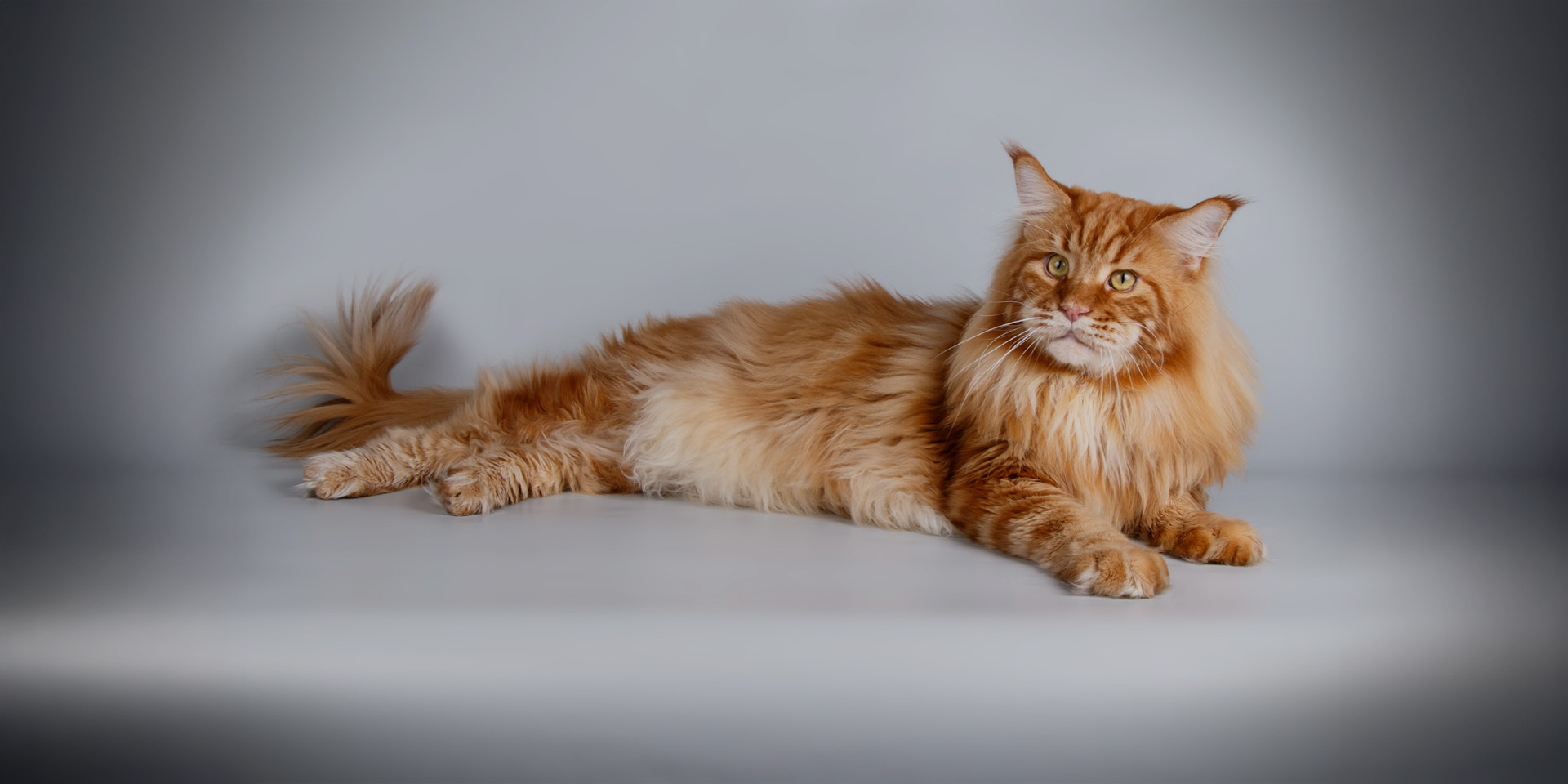
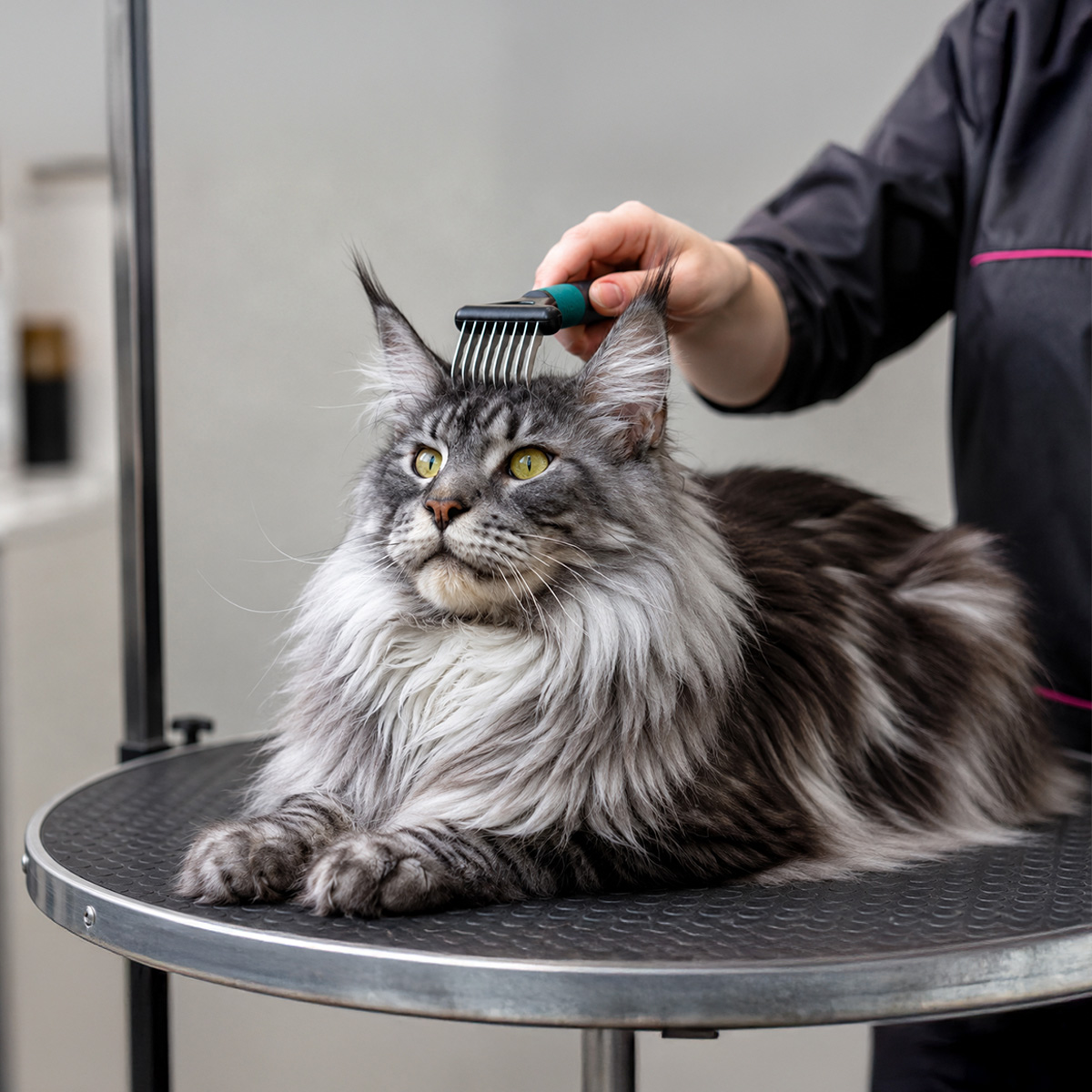
The Maine Coon is captivating from the first glance: majestic, fluffy, with a spectacular tail and tufted ears. But within a month of bringing one home, most owners are asking the exact same question: "Why does it shed so much — and what can I do about it?"
The answer is straightforward: Maine Coons shed 2–3 times more than most cat breeds due to their dense triple-layer coat and large body size ([PurrfectGrooming](https://purrfectgrooming.pet), 2026). But that isn't a sentence. The right brushing technique, a proper bathing routine and a handful of key products make the situation entirely manageable.
Maine Coons shed year-round, with two peak waves in spring and autumn. Brushing is needed 2–3 times per week, daily during shedding season. Bathing every 4–6 weeks with a long-coat shampoo plus a conditioning balm is essential every time. According to CFA data (2025), the Maine Coon ranks #1 in popularity in Ukraine and has been in the global top 3 for four consecutive years.
Why Maine Coons Shed So Much: The Coat Structure Explained
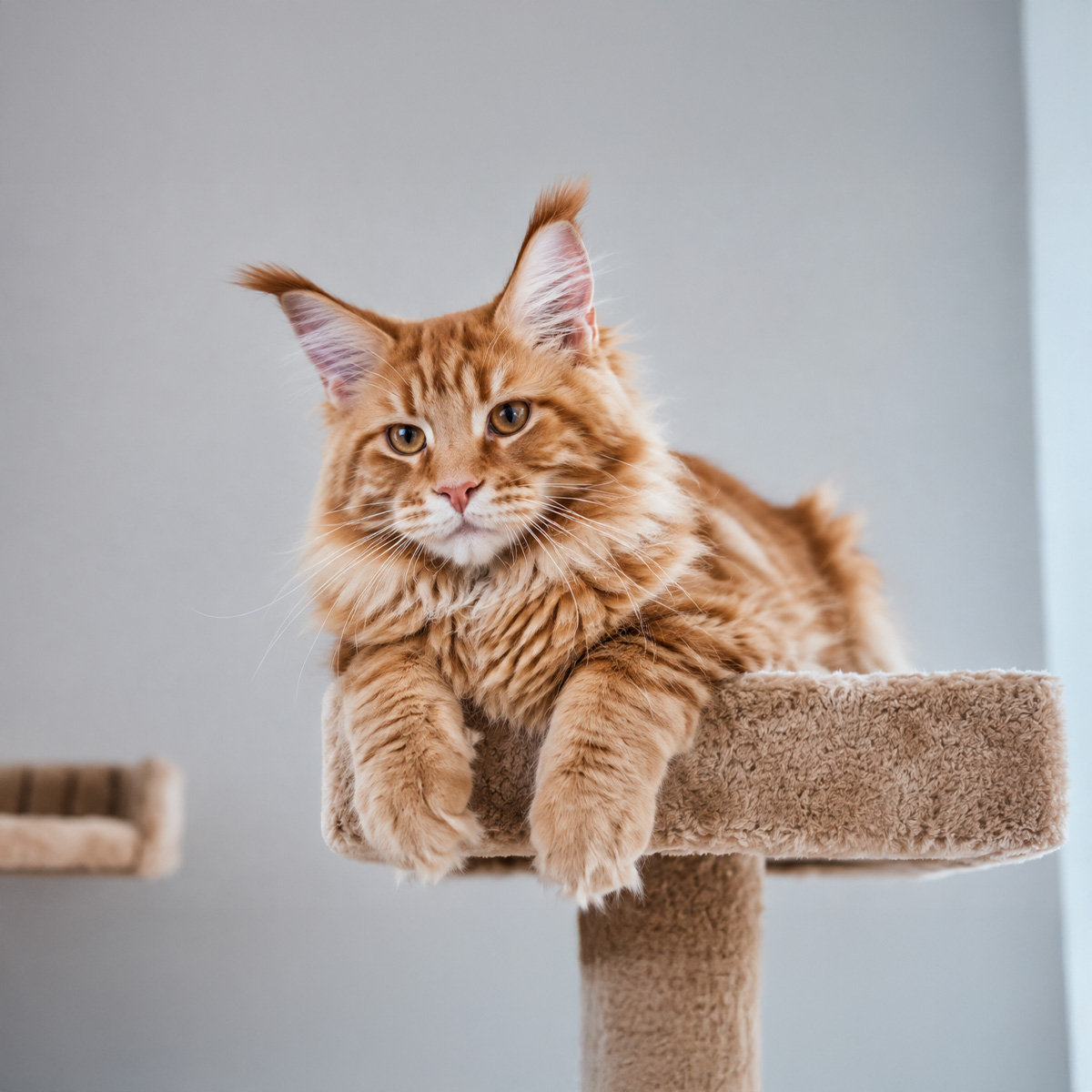
Most domestic cats have a two-layer coat. The Maine Coon is one of the few breeds with three. The long outer guard layer repels water and insulates against cold. The intermediate layer creates the characteristic "mane-like" silhouette. The dense inner undercoat is a thermal regulator that renews itself completely twice a year.
That undercoat is what causes the heavy shedding. In spring the Maine Coon sheds its winter coat; in autumn it swaps the summer coat for a winter one. In between, there's a quiet daily background shedding that most owners don't notice until they sit down on a dark sofa.
Fact: Based on observations from Maine Coon owners, a single brushing session during peak shedding can yield 50 to 150 g of loose fur — depending on the cat's size and undercoat condition. Maine Coons weigh between 5 and 12 kg, and their total coat surface area is 2–3 times larger than that of an average domestic cat ([Maine-Coon-Cat-Nation](https://www.maine-coon-cat-nation.com), 2026).
There's one more characteristic worth knowing: Maine Coon fur is naturally slightly oily. This is a protective adaptation — the oil-treated guard layer is water-resistant, much like a waxed jacket. Without regular bathing, however, the oil accumulates, the coat loses its sheen and begins to clump.
What Tools You Need to Brush a Maine Coon
The wrong tools are the main reason owners spend hours brushing and see no real improvement. The right ones deliver visible results in 20–30 minutes, with a contented cat at the end of it.
The metal comb is the most important verification tool: it should pass freely through the coat from root to tip. If it catches — there's a matt. The slicker brush loosens and removes dead hair. The furminator is used specifically during peak shedding — it pulls out detached undercoat without touching live hair. The natural bristle brush is the finishing touch: it distributes natural oils and gives the coat its shine.
Golden rule: mist the coat with a detangling spray before every brushing session. Dry Maine Coon hair snaps under mechanical stress, creating "broken ends" that look like excessive shedding. A moistened coat brushes through cleanly without breakage and yields far better results.
Before every brushing session: Puramur Express Hair Protector Fluid Spray — formulated for effortless detangling of any coat type, including the dense triple-layer coat of a Maine Coon. Evening primrose and marula oils nourish each strand from root to tip; hydrolysed keratin and silk proteins protect against mechanical damage during brushing. Eliminates static. Apply to dry or slightly damp fur before each session.
Maine Coon Brushing Technique: Tail to Head
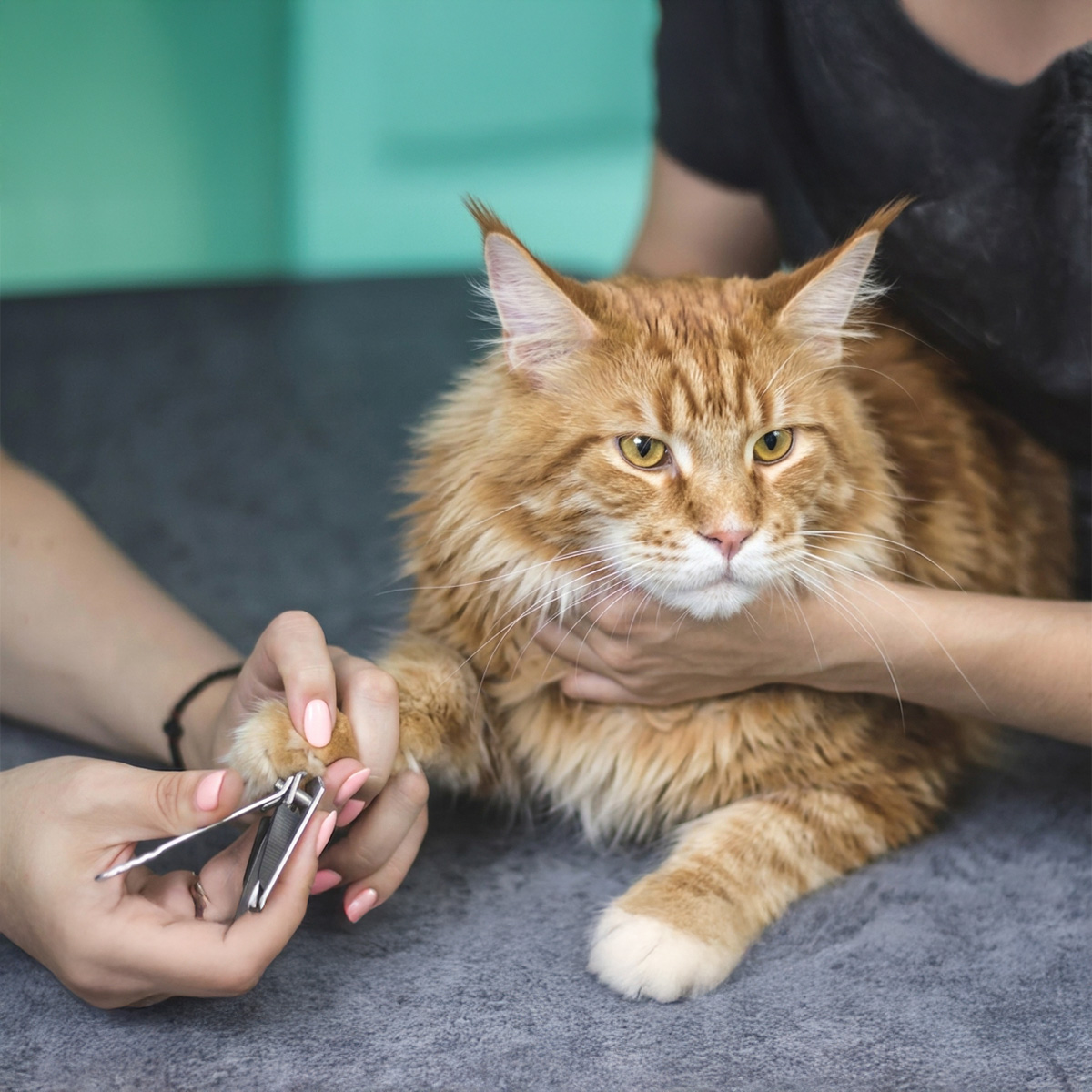
Brushing a Maine Coon isn't "running a brush over the coat a few times." It's a 25–40 minute structured process that delivers a specific result: removed undercoat, clean coat and a satisfied cat. Here's how to do it correctly.
- Mist the entire coat with detangling spray — evenly, from tail to head. Allow 1–2 minutes.
- Work the slicker brush against the direction of coat growth — from tail toward head. This lifts the undercoat and brings it to the surface.
- Follow with the deshedding tool in the direction of growth — short strokes, no heavy pressure. The tool captures undercoat without force.
- Check all risk zones with the metal comb: behind the ears, under the armpits, in the groin, between the back legs, at the base of the tail. These are where matts form first.
- Finish with the natural bristle brush in the direction of growth — the final pass for shine and coat settling.
Important: Never try to pull a dense matt apart by force. It's painful and damages the skin. Apply a conditioning balm or detangling spray directly to the matt, wait 5 minutes and then work through it with your fingers from the tips toward the root. If a matt is very tightly packed, cutting it out carefully is far better than forcing a comb through it.
How to Bathe a Maine Coon: Frequency, Shampoo and Key Details
Maine Coons are a rare exception among cats: most of them tolerate bathing well. It's a breed with a distinctly "dog-like" personality, and water is rarely a source of stress when introduced from kittenhood. Bathing frequency: once every 4–6 weeks.
The Maine Coon's naturally oily coat needs a shampoo that cleanses deeply and cuts through grease without drying out the skin. Concentrated long-coat formulas are the optimal choice: they penetrate all three layers and distribute evenly for a thorough clean.
For bathing a Maine Coon: Puramur Crystal Shine Shampoo — a deep-cleansing shampoo for dogs and cats. Delivers crystal-clear cleansing even through the dense, naturally oily coat of a Maine Coon, restoring shine and coat structure. Eliminates dullness and clumping — two of the most common coat problems in this breed. Apply to wet fur, lather thoroughly and leave for 3–5 minutes before rinsing completely.
Conditioning Balm — Non-Negotiable After Every Bath
The Maine Coon's triple-layer coat needs conditioning after every wash. Shampoo opens the cuticle scales for cleansing; the balm closes them back and restores the coat's natural protective layer. Without a balm, the coat becomes stiff after drying, prone to static and significantly harder to brush.
After every bath: Puramur Hyaluronic Protection Conditioning Balm — a moisturising balm developed for excessively dry coats, ideal for the long triple-layer fur of a Maine Coon. Hyaluronic acid and aloe vera juice restore the elasticity of each strand; seaweed extracts reduce skin irritation. The coat becomes soft, silky and easy to brush. Apply to damp fur after shampooing, leave for 5–10 minutes, rinse thoroughly.
Bathing and Drying Technique
Water temperature: 36–38°C. A Maine Coon's coat is very dense — saturating it all the way to the skin takes several minutes of pressing your palms firmly into the fur. Rinse thoroughly: shampoo residue in such a dense coat causes persistent itching. After bathing, blot with a towel — don't rub. Blow-dry on medium heat, brushing with the slicker brush against the airflow. The cat must be completely dry — moisture left in the undercoat leads directly to fungal skin infections.
Complete Maine Coon Coat Care Schedule
| Procedure | Normal period | During shedding | Product / tool |
|---|---|---|---|
| Slicker brush session | 2–3× per week | Daily | Spray + slicker brush |
| Deshedding tool | Once a week | Daily | Spray + furminator |
| Metal comb check | After every brushing session | After every brushing session | Metal comb |
| Full bath | Every 4–6 weeks | Every 3–4 weeks | Crystal Shine |
| Conditioning balm | After every bath | After every bath | Hyaluronic Protection |
| Detangling spray | Before every brushing session | Before every brushing session | Express Hair Protector |
| Ear cleaning | Every 1–2 weeks | Weekly | Ear cleaning lotion |
Frequently Asked Questions (FAQ)
Is it normal for a Maine Coon to shed this much?
Yes — this is completely normal for the breed. Maine Coons shed 2–3 times more intensely than most domestic cats due to their dense triple-layer coat ([PurrfectGrooming](https://purrfectgrooming.pet), 2026). Two peak waves — spring and autumn. Between them: daily background shedding. Regular brushing reduces the volume of loose fur in the home by at least half.
How often should I bathe my Maine Coon?
Every 4–6 weeks for an indoor cat that doesn't go outside. Maine Coon fur is naturally slightly oily — without regular bathing it becomes dull and starts to clump. During seasonal shedding, you can increase frequency to every 3–4 weeks: bathing helps "wash out" the undercoat that's already detached from the follicle but still caught in the fur.
How do I prevent matts in a Maine Coon?
Three rules: regular brushing (minimum 2–3 times per week), detangling spray before every session and conditioning balm after every bath. Pay special attention to the highest-risk zones: behind the ears, under the armpits and between the back legs — constant friction means matts form there fastest.
Does a Maine Coon need to be trimmed?
A standard Maine Coon doesn't need trimming: the coat has a natural self-settling length that doesn't grow beyond the breed standard. Hygiene trimming is only needed between the paw pads (where fur collects dirt and ice in winter) and around the base of the tail. Everything else is managed through brushing and bathing alone.
Which shampoo is best for a Maine Coon?
A Maine Coon shampoo needs to cut through natural grease effectively without over-drying the skin. Concentrated long-coat formulas are optimal: they penetrate all three layers, cleanse evenly and leave the coat glossy and manageable. A conditioning balm after every wash is non-negotiable — never shampoo alone.
Summary: The Essential Home Grooming Kit for a Maine Coon
A Maine Coon isn't a breed where a weekly brush-through is enough. But there's nothing extraordinary needed either — just a consistent approach and the right products:
- Metal comb (fine + wide teeth) — for checking results and risk zones
- Slicker brush — for the main brushing work
- Furminator or deshedding tool — for undercoat removal during shedding season
- Natural bristle brush — for the finishing polish
- Detangling spray — before every session, without exception
- Deep-cleansing shampoo — every 4–6 weeks
- Conditioning balm — after every bath, always
A well-groomed Maine Coon comes down to 25–30 minutes two to three times a week plus a bath once a month. Consistency matters more than duration: short and regular beats occasional marathon sessions every time.
Also read: how to choose the right shampoo for your pet and our guide to Pomeranian coat care — another fluffy, double-coated breed with similar grooming needs.