
Your shopping cart is empty!
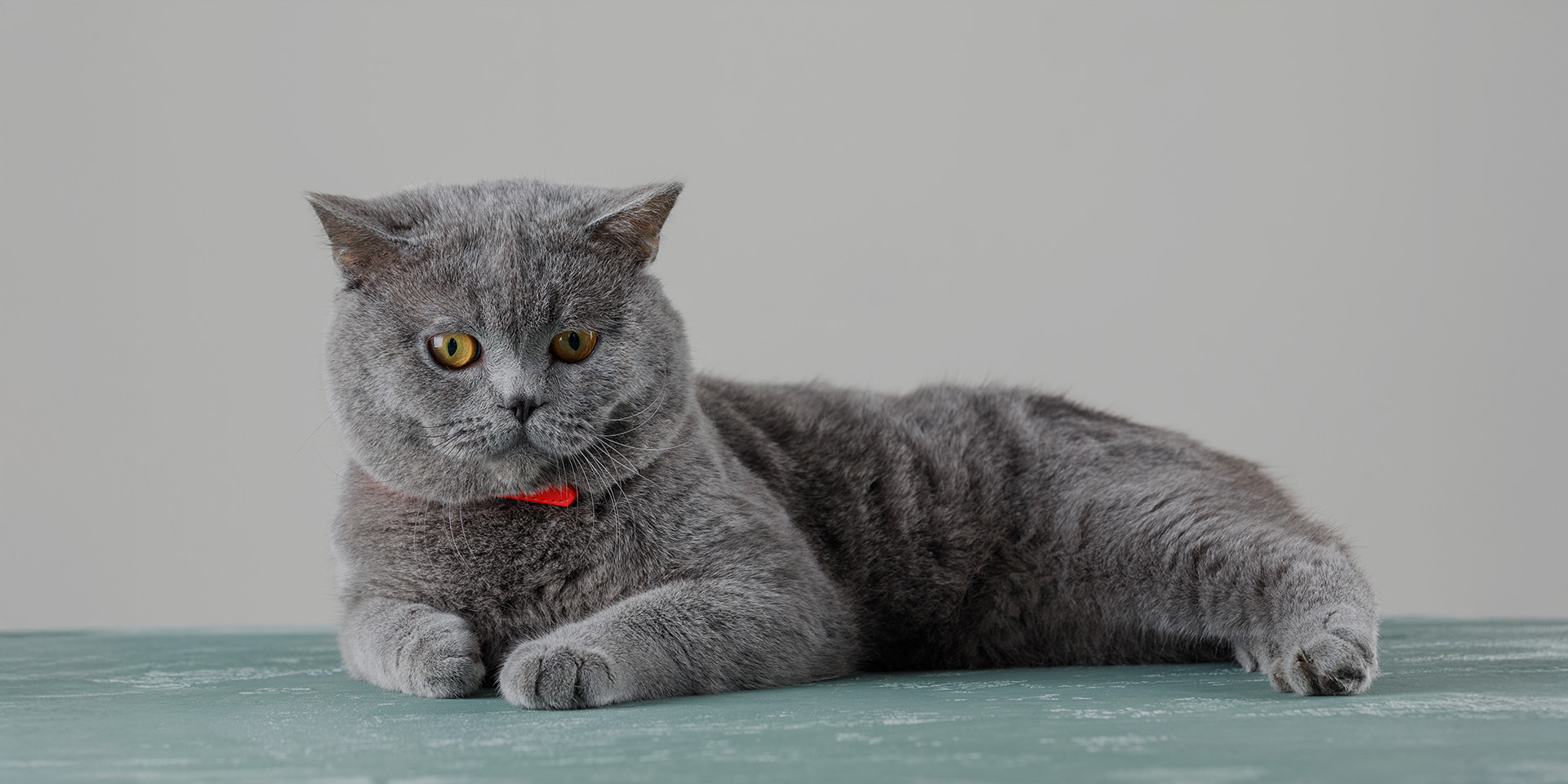
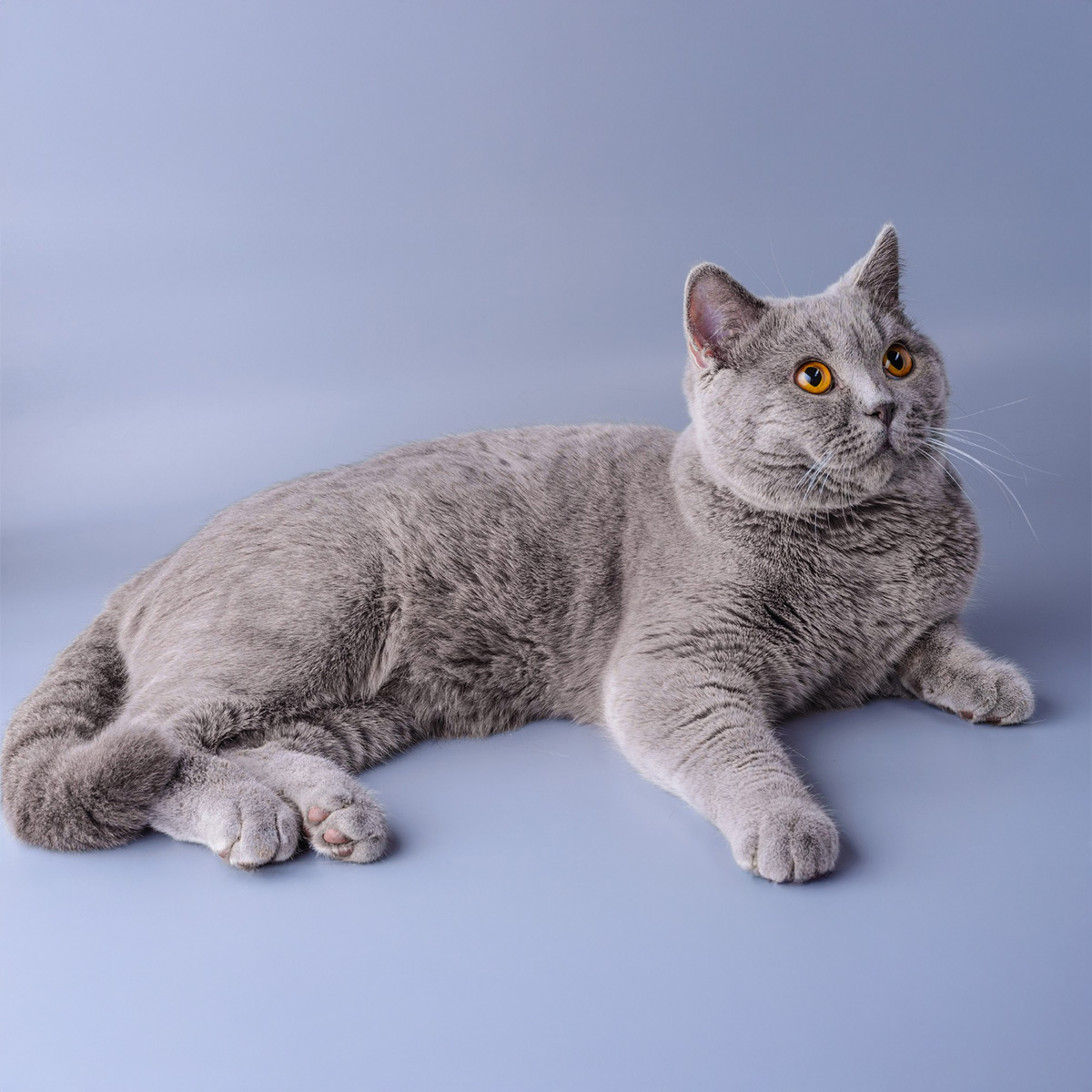
"Let's get a British Shorthair — short fur, less hassle." That's what most people think before getting this breed. Three months later they discover that the blue plush "jacket" has left its mark on every surface in the flat, and a standard brush barely makes a dent.
The British Shorthair holds the record for coat density among shorthaired cat breeds. According to a Paw Vortex survey (2025), 80% of British Shorthair owners report moderate year-round shedding, with the volume increasing by up to 40% during seasonal coat changes. Short hair doesn't mean less shedding. It just behaves differently.
British Shorthairs have the densest undercoat of any shorthaired breed and shed year-round, peaking in spring and autumn. Brushing 2–3 times a week is the minimum. Bathing every 4–8 weeks. Omega-3 coat vitamins show a visible improvement within 4 weeks. Ears: clean every 1–2 weeks. Owners who brush their British Shorthair 3 times a week spend 60% less time vacuuming (Paw Vortex, 2025).
Why British Shorthairs Shed So Much: The Coat Structure
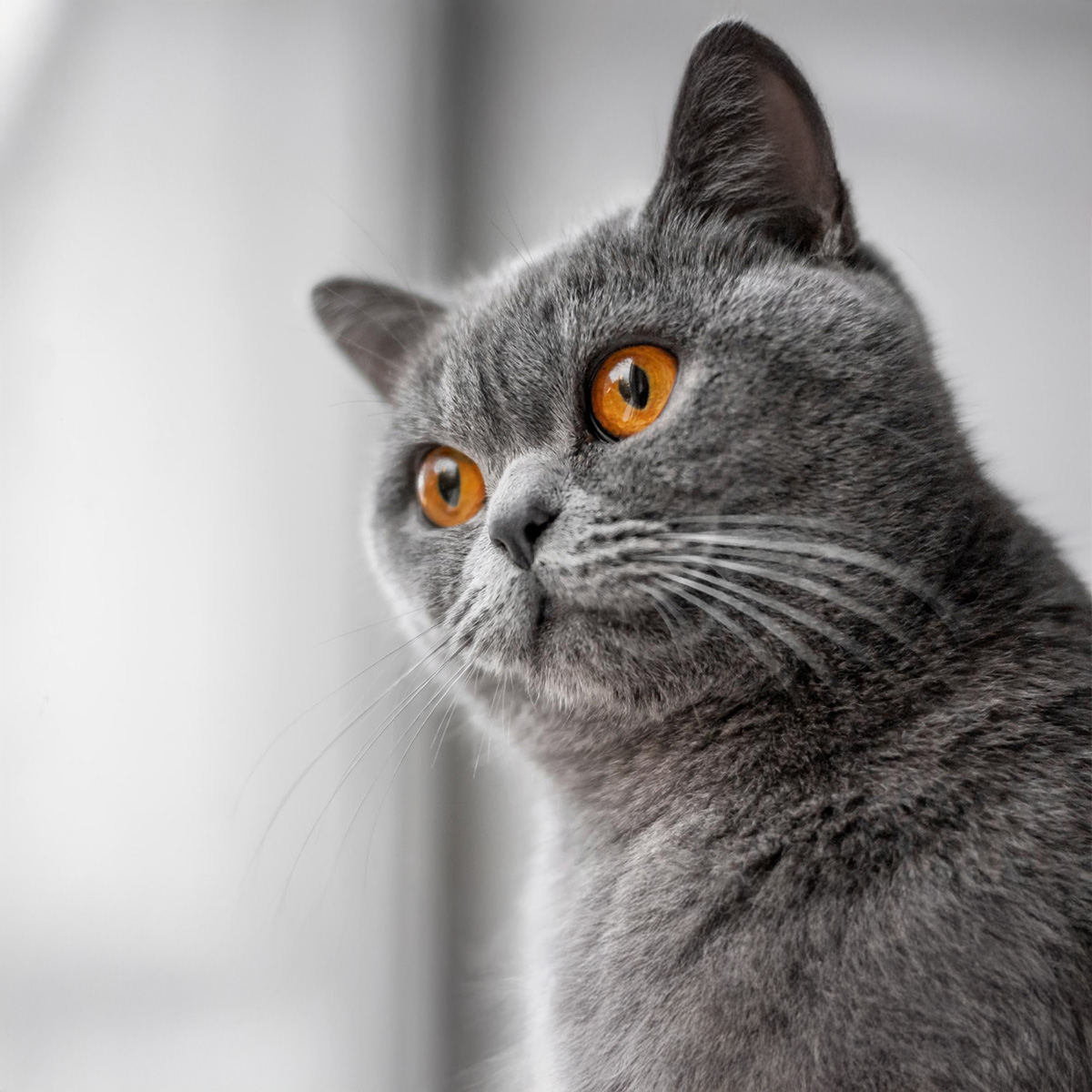
Most shorthaired cat breeds have a thin, barely noticeable undercoat. The British Shorthair is the exception. Its double coat consists of a stiff outer guard layer and an extraordinarily dense undercoat that stands perpendicular to the skin. This is exactly why the British Shorthair looks "plush" — and exactly why it sheds far more than owners expect.
The British Shorthair's undercoat often stays trapped inside the coat rather than falling out freely. When it isn't brushed out, it compresses and forms tight patches that pull on the skin (Almonte Cats, 2025). Owners assume there isn't much shedding because they don't see it floating in the air. In reality it's collecting in clumps on furniture — and being swallowed by the cat during self-grooming.
Fact: British Shorthairs produce an average of 1–2 hairballs per month. Regular brushing can cut that number in half (Paw Vortex, 2025). A single quality deshedding session removes up to 90% of loose undercoat in one go.
Myth: "A British Shorthair doesn't need brushing — it's short-haired." Reality: because the coat is short, the effect of brushing isn't obvious from the outside — but it's critical for the cat's health. Dead undercoat that stays in the coat gets swallowed during grooming and forms hairballs that can cause intestinal blockage.
How to Brush a British Shorthair Correctly: Tools and Technique
British Shorthairs need a different approach than long-haired breeds. The goal is to reach the undercoat without irritating the skin or damaging the stiff outer guard layer.
Which Tools You Need
A rubber grooming glove or massage brush is the ideal starting point: it massages the skin, collects surface fur and gets the cat comfortable with the session. A furminator or deshedding tool is the primary instrument for removing undercoat — more important for this breed than for most shorthaired cats, precisely because of how dense the undercoat is. A wide-toothed metal comb checks results and covers risk zones.
Pro tip: always apply a detangling spray before a brushing session. A British Shorthair's short coat builds up static and repels the brush. The spray neutralises the charge, moisturises the undercoat and allows the furminator to pull out significantly more fur in each pass.
Before every brushing session: Puramur Express Hair Protector Fluid Spray — eliminates static and moisturises the coat before mechanical grooming. Evening primrose and marula oils nourish each strand from root to tip; hydrolysed keratin and silk proteins protect the stiff outer guard layer from breakage. The result: more undercoat stays on the brush, not on the furniture. Apply to dry or slightly damp fur.
Brushing Technique
Start with the rubber glove: work against the direction of coat growth from tail to head — this loosens the undercoat and immediately collects surface fur. Follow with the furminator in the direction of growth, using short strokes without heavy pressure. Finish with the metal comb: it will reveal whether any compacted areas remain. If the comb catches — go over that zone with the furminator again.
Coat Vitamins for British Shorthairs: When External Care Isn't Enough
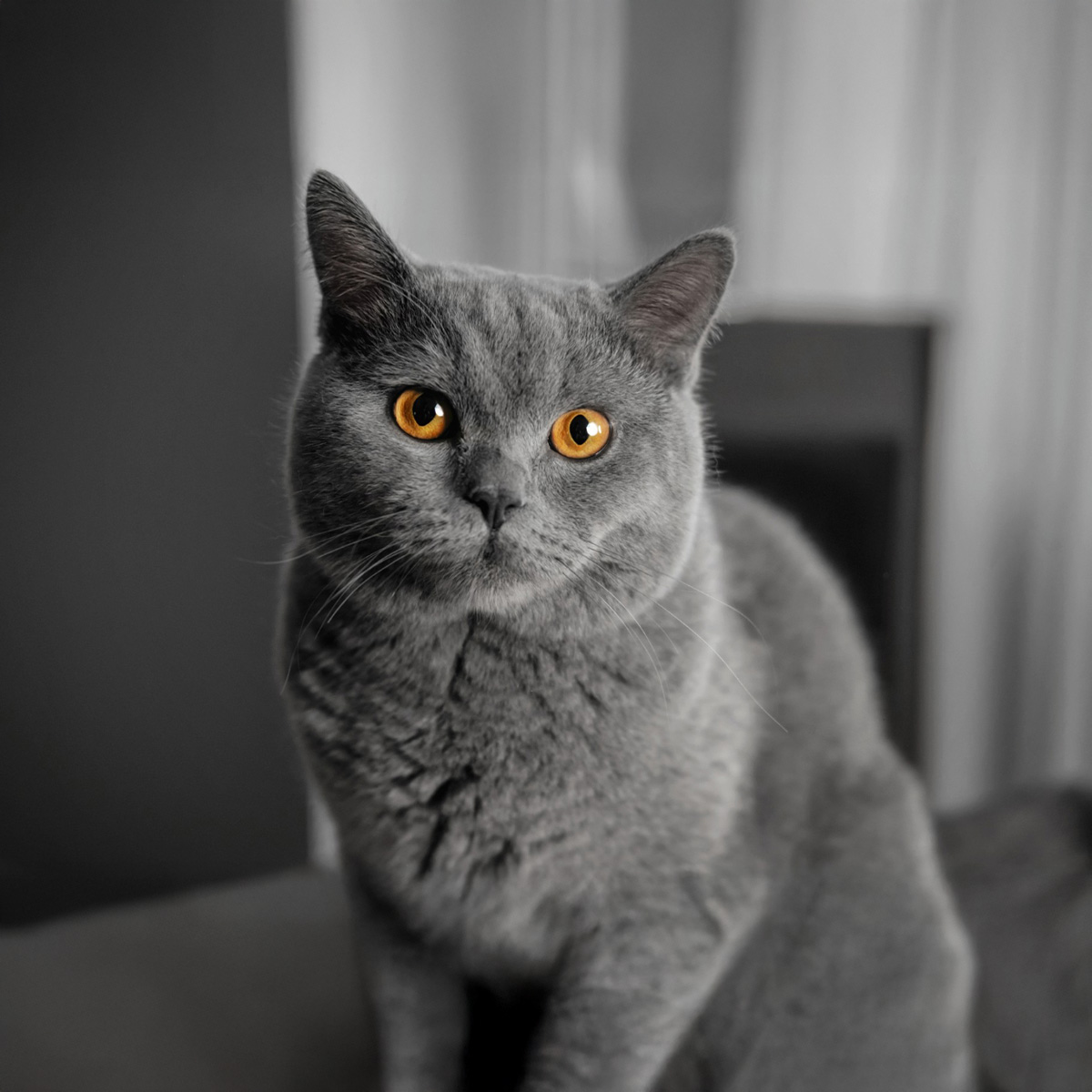
If a British Shorthair's coat has become dull, soft or is shedding excessively outside of season — external grooming alone is no longer enough. Hair is composed of roughly 90% keratin protein, and growing it properly requires the right raw materials from within.
Omega-3 supplements improve coat shine in 9 out of 10 cats (Paw Vortex, 2025). B vitamins — biotin, B5 (pantothenic acid) and B7 — directly influence hair strand structure and follicle strength. Without them, the coat grows more slowly, becomes brittle and develops a frayed, dishevelled appearance.
Vitamin support for the coat — applied externally: Puramur Wake Up Coat Mask — an intensive vitamin treatment for strengthening, restoring and stimulating coat growth. B vitamins, nettle and calamus extracts together with emollients and coconut oil nourish the hair follicles, accelerate growth and thicken the cortex of each hair strand. Particularly effective after seasonal shedding or when the coat has become dull or weakened. Apply to damp fur after shampooing, leave for 5–10 minutes, rinse thoroughly. Course: 4–6 weeks.
British Shorthair Ears: Why They're Often Overlooked
British Shorthairs have straight, slightly forward-tilting ears — unlike the Scottish Fold, they ventilate well. But that doesn't mean they can be ignored. The breed is prone to earwax accumulation due to the specific anatomy of the ear canal, and without regular preventive cleaning the risk of ear infections and ear mites increases noticeably.
How and What to Use for Ear Cleaning
Check the ears weekly — during the brushing session. A healthy ear canal is clean or shows only a small amount of light brown wax. To clean: apply a specialist ear-cleaning powder or lotion to a cotton pad and gently wipe the visible areas with a motion from the centre outward. No cotton swabs — only a cotton pad or specialist applicator.
For ear care: Puramur Clean Ears Antibacterial Powder — simplifies the cleaning of the ear canal and neutralises unpleasant odour. The antibacterial formula eliminates pathogenic microflora and creates a protective environment. Regular use reduces the risk of ear infections and ear mites. Apply directly into the ear canal, gently massage the base of the ear and allow the cat to shake out the excess — then carefully wipe with a cotton pad.
When to see a vet immediately: dark brown or black discharge with a sharp odour, the cat shaking its head, scratching its ears to the point of visible irritation, or a reddened or swollen ear canal. These can indicate ear infection, ear mites or a fungal condition — do not attempt home treatment.
Bathing a British Shorthair: Infrequently, but Correctly
British Shorthairs are fastidious self-groomers. Over-bathing destroys the natural lipid barrier and causes skin dryness. Optimal frequency: every 4–8 weeks depending on the cat's activity level and coat condition. During seasonal shedding, this can be reduced to every 4 weeks: bathing helps "wash out" the dead undercoat that has detached from the follicle but is still trapped in the fur.
For bathing during and after shedding season: Puramur Vitality Complex & Vitamin B Shampoo — a strengthening shampoo developed for gentle cleansing during heavy shedding periods. B vitamins, D-panthenol and sea algae strengthen hair follicles and stimulate new coat growth. Anti-static effect — particularly valuable for British Shorthair fur. Dilutable at 1:5.
Key bathing rule: always brush your British Shorthair with a furminator before bathing. Detached undercoat that's still in the fur clumps together when wet and sets into dense mats after drying that are very difficult to remove. The rule is simple: brush first, then bathe.
Complete British Shorthair Coat Care Schedule
| Procedure | Normal period | Shedding season | Product / tool |
|---|---|---|---|
| Rubber glove brushing | 2–3× per week | Daily | Spray + glove |
| Furminator / deshedding tool | 1–2× per week | Daily | Spray + furminator |
| Full bath | Every 6–8 weeks | Every 4 weeks | Vitality Complex |
| Coat mask | Every 3–4 weeks | Every 2 weeks | Wake Up |
| Ear cleaning | Every 1–2 weeks | Weekly | Clean Ears |
| Nail trimming | Every 2–3 weeks | Every 2–3 weeks | Cat nail clippers |
Frequently Asked Questions (FAQ)
Why does a British Shorthair shed so much if it's short-haired?
British Shorthairs have the densest undercoat of any shorthaired breed. 80% of owners report moderate year-round shedding that increases by up to 40% during seasonal changes (Paw Vortex, 2025). Short fur doesn't float through the air — it collects in clumps and stays trapped in the undercoat, so visible shedding appears lower than it actually is.
How can I reduce British Shorthair shedding?
Three steps: regular furminator brushing (2–3 times per week), bathing with a strengthening shampoo every 4 weeks during peak shedding, and coat vitamin support. Omega-3 fatty acids and B vitamins strengthen hair follicles and reduce excessive off-season hair loss noticeably within 4–6 weeks.
How often should I clean a British Shorthair's ears?
Weekly — preventively, during the regular brushing session. British Shorthairs are prone to earwax accumulation due to the anatomy of the ear canal. Use an antibacterial ear-cleaning powder or lotion on a cotton pad, working from the centre outward. No cotton swabs.
Does a British Shorthair need coat vitamins?
If the coat is healthy and glossy, a balanced diet is sufficient. But if the coat has become dull, soft or is shedding outside of season — that's a signal of deficiency. A coat mask with B vitamins and natural oils, applied after bathing, acts directly on the hair follicle and delivers a visible result within 4–6 weeks.
How often should I bathe my British Shorthair?
Every 6–8 weeks under normal conditions. During seasonal shedding, every 4 weeks. Always brush with a furminator before bathing. After bathing, blow-dry completely — never leave the cat damp in a cool room or near a draught.
Summary: The Essential Grooming Kit for a Perfect British Shorthair Coat
The British Shorthair is a self-sufficient cat. But "self-sufficient" doesn't mean "no care needed." Here's what genuinely makes a difference:
- Rubber grooming glove or massage brush — for daily surface fur collection
- Furminator or deshedding tool — for undercoat removal 2–3 times per week
- Metal comb — for checking results throughout
- Detangling spray — before every brushing session
- Strengthening shampoo with vitamins — for bathing during shedding season
- Coat mask with B vitamins — every 2–4 weeks
- Antibacterial ear-cleaning powder or lotion — weekly
Also read: how to choose the right shampoo for your cat, our guide to Maine Coon coat care and the Scottish Fold grooming guide.