
Your shopping cart is empty!
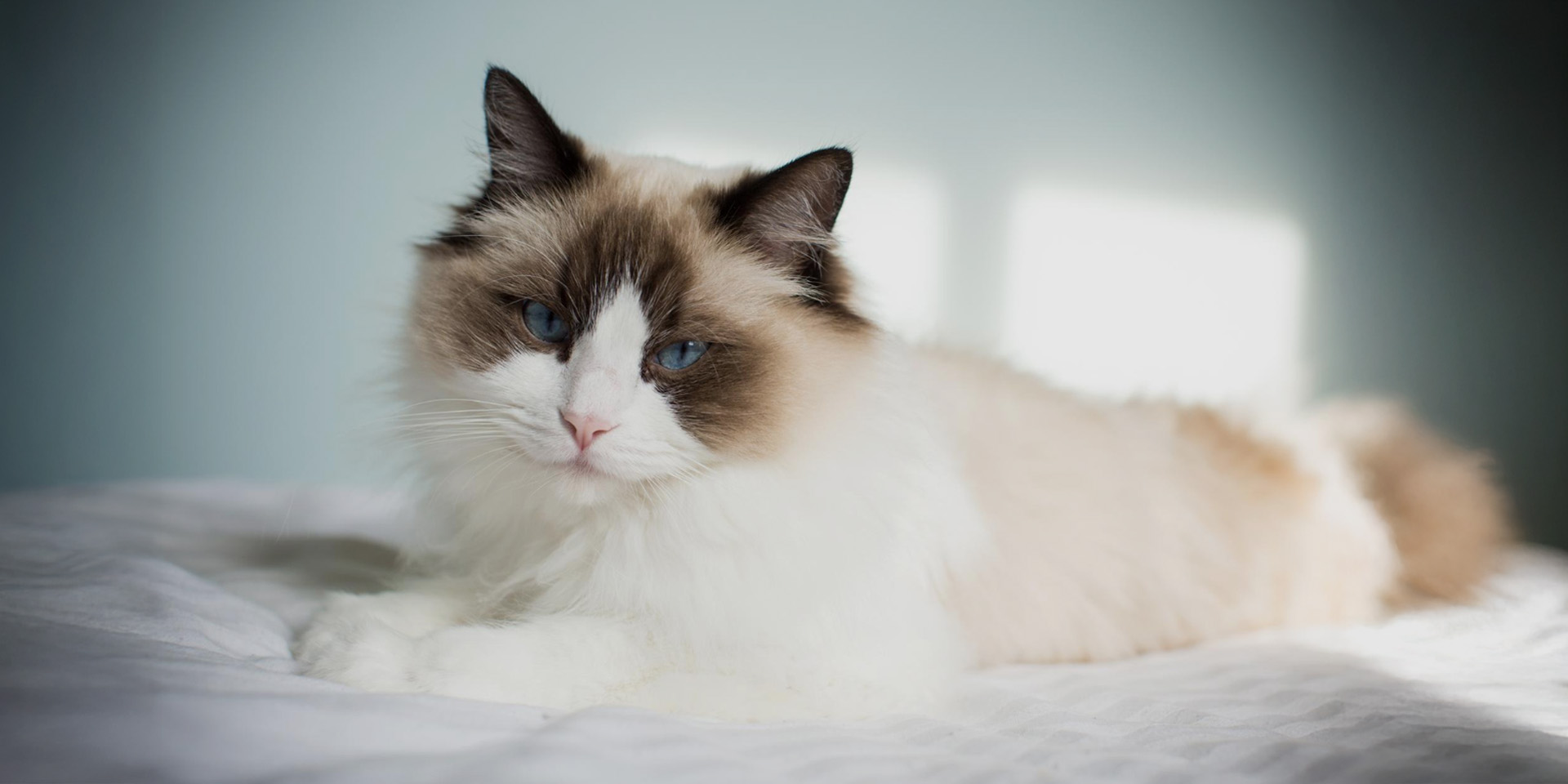
A Ragdoll makes an impression immediately: large, calm, with vivid blue eyes and silky fur that catches the light. Here's what's important to understand: Ragdolls shed at a moderate, predictable rate — but their coat is unique in that it lacks the dense undercoat found in most long-haired breeds (Almonte Cats, 2026). That means fewer matts — but it absolutely doesn't mean less attention.
In a Paw Vortex survey of 850 Ragdoll owners (2025), 57% initially underestimated the grooming commitment the breed requires. Long silky fur without an undercoat dries out, loses its shine and starts to break — not from matting, but from lack of moisture. That's why Ragdoll coat care is primarily about nourishment and hydration.
Ragdolls have long silky fur with minimal undercoat — it rarely matts but dries out and loses its lustre without regular moisturising. Brush 2–3 times per week. Bathe every 4–6 weeks with a gentle shampoo plus conditioner — always. Apply a shine serum between baths. Loose hair can be reduced by 80–90% with weekly brushing, Omega-3 and adequate hydration (Paw Vortex, 2025).
Why Ragdoll Fur Is Different: What Sets It Apart from Other Long-Haired Breeds
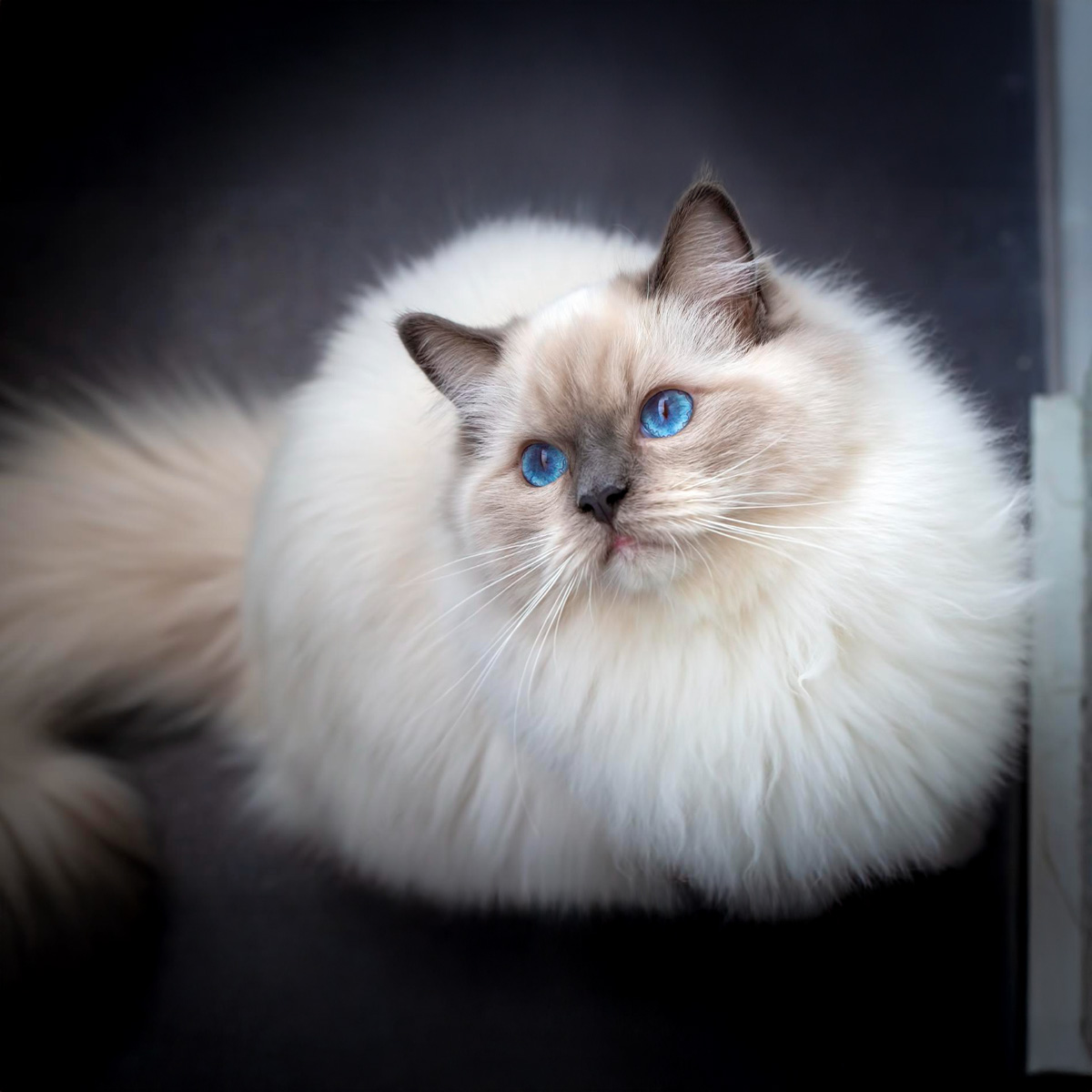
Most long-haired breeds — Maine Coons, Norwegian Forest Cats, Siberians — have a powerful double undercoat that provides volume and warmth. The Ragdoll is the exception. Its coat lacks the dense, compact undercoat typical of breeds with heavy seasonal shedding (Almonte Cats, 2026). Each Ragdoll hair strand is closer in structure to human hair: long, soft, slipping easily through the fingers.
This gives the breed a genuine advantage: Ragdoll fur almost never forms matts or clumps. But there's a trade-off. Without an undercoat, each individual strand is exposed to external influences: dry indoor air, static electricity, the wrong grooming products — and the coat becomes brittle, dull, developing split ends.
Fact: Ragdolls shed at a moderate, steady rate year-round. Because of the soft coat structure, loose hair often stays trapped close to the skin until a grooming session — so owners see less hair floating in the air and more on the brush during grooming (Almonte Cats, 2026).
Myth: "Ragdolls have no undercoat — so matts aren't a concern and brushing isn't needed." Reality: matts in Ragdolls are genuinely rare. But without regular brushing, the coat accumulates dead hair, dust and static — all of which accelerate drying and brittleness. For a Ragdoll, brushing is primarily about skin massage and distributing natural oils, not detangling.
How to Brush a Ragdoll: Tools and Technique for Silky Fur
The approach to brushing a Ragdoll is fundamentally different from a British Shorthair or a Maine Coon. The goal isn't to remove undercoat (there's almost none) — it's to distribute natural oils, remove dead hair and maintain the moisture level of each individual strand.
Which Tools Work
A wide-toothed metal comb is the primary tool for a Ragdoll. It passes delicately through long fur without snapping or stretching individual strands. A natural bristle brush is ideal for the finishing pass — distributing oils and adding shine. A furminator with stiff metal teeth is not recommended for Ragdolls: it breaks the long strands that, without undercoat, have nothing structural to hold them together during mechanical stress.
The Ragdoll rule: always mist the coat before brushing. Dry long fur without undercoat snaps and builds up static under any mechanical pressure. A few sprays — and the comb glides through the silky coat with zero resistance.
Before every brushing session: Puramur Express Hair Protector Fluid Spray — ideal for long silky fur with no undercoat. Evening primrose and marula oils deeply nourish each strand; hydrolysed keratin restores and protects the hair structure; silk proteins add slip and shine. Eliminates static — critical for a Ragdoll's lightweight coat. Apply to dry or slightly damp fur before every brushing session.
Ragdoll Brushing Technique
Start with the wide-toothed comb: smooth strokes in the direction of coat growth from head to tail, gently and without pressure. Pay particular attention to friction zones — behind the ears, under the armpits, between the back legs — these are the spots where small matts can form if a few sessions are skipped. Finish with the natural bristle brush: it distributes natural oils and delivers exactly the silky sheen the breed is celebrated for.
Moisture — the Primary Need of a Ragdoll's Coat
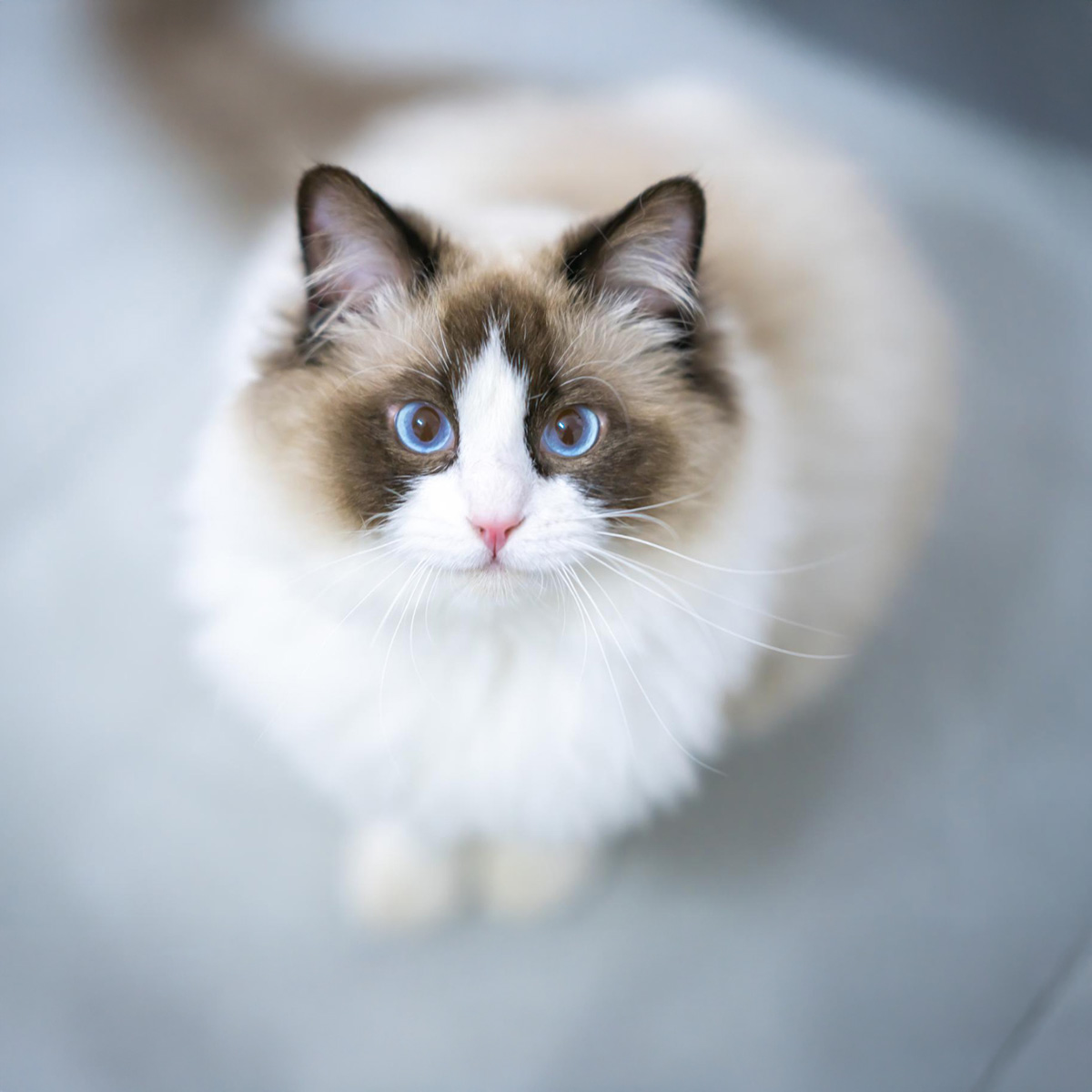
Where a British Shorthair's coat needs undercoat removal, a Ragdoll's coat needs moisture above all else. Without an undercoat, each individual strand is exposed to external stressors: dry indoor air in winter, static electricity, hard water during bathing — all of these break down the hair's protective lipid layer and lead to brittleness.
Omega-3 supplements and adequate hydration can reduce loose hair in the home by 80–90% (Paw Vortex, 2025). But external moisture — sprays, balms, serums — works faster and delivers a visible result from the very first application.
After every bath — moisture is non-negotiable: Puramur Hyaluronic Protection Conditioning Balm — developed for excessively dry coats and perfectly suited to the long single-layer fur of a Ragdoll. Hyaluronic acid and aloe vera juice restore the resilience and shine of each strand from within; seaweed and stevia extracts soothe the skin and stimulate healthy coat growth. Apply to clean damp fur after shampooing, leave for 5–10 minutes, rinse thoroughly.
Between baths — for shine and protection: Puramur Extra Gloss Serum — coat restoration and shine enhancement for dogs and cats. Wraps each hair strand in a protective film, deeply nourishes the cortex, smooths cuticle irregularities and seals split ends. The result: glossy, flawless fur with a diamond-like brilliance — exactly the effect that makes Ragdolls so striking in photographs. Apply a few drops to dry fur after brushing or between baths.
Bathing a Ragdoll: Infrequently, Gently, With the Right Products
Ragdolls are exceptionally cooperative during bathing — their calm, "ragdoll" temperament means they rarely resist water procedures when introduced from kittenhood. Bath frequency: every 4–6 weeks. Long fur accumulates dust and grease faster than short fur, so regular bathing is a necessary part of the routine rather than an occasional extra.
Key Points During Bathing
Water temperature: 36–38°C. Ragdoll fur is long and lightweight — soak it thoroughly by pressing your hands through it. Apply shampoo in smooth strokes with the direction of coat growth — never rub against it, as this encourages tangling. Rinse thoroughly and at length. After bathing — conditioning balm, always. Blow-dry on the lowest heat setting, combing the fur in the direction of growth while drying: this is when the coat's natural volume and shine really come together.
For bathing a Ragdoll: Puramur Basic Care Shampoo — a concentrated gentle shampoo for all breeds and coat types. Aloe vera and plant extracts of burdock, bidens and wormwood cleanse delicately without disrupting the natural lipid layer — critical for the fine, undercoat-free strands of a Ragdoll. Leaves the coat soft and makes the next brushing session effortless. Dilutable at 1:5.
After bathing — always dry completely. A Ragdoll's long fur without undercoat stays damp far longer than it feels from the outside. Damp fur is the direct cause of fungal skin infections and unpleasant odour. Never leave a Ragdoll in a cool room with a wet coat.
Complete Ragdoll Coat Care Schedule
| Procedure | Normal period | Shedding season | Product / tool |
|---|---|---|---|
| Metal comb brushing | 2–3× per week | 3–4× per week | Spray + wide-toothed metal comb |
| Natural bristle brush | After every brushing session | After every brushing session | Natural bristle brush |
| Shine serum | After every brushing session | After every brushing session | Extra Gloss |
| Full bath | Every 4–6 weeks | Every 3–4 weeks | Basic Care |
| Conditioning balm | After every bath | After every bath | Hyaluronic Protection |
| Ear cleaning | Every 2 weeks | Weekly | Ear lotion + cotton pads |
| Nail trimming | Every 2–3 weeks | Every 2–3 weeks | Cat nail clippers |
Frequently Asked Questions (FAQ)
Do Ragdolls shed?
Ragdolls shed at a moderate, steady rate year-round, without the dramatic seasonal coat blows characteristic of breeds with dense undercoats (Almonte Cats, 2026). Small seasonal increases occur in spring and autumn. Because of the soft coat texture, loose hair doesn't float through the air — it stays on the brush during grooming — so visible shedding appears minimal.
Do Ragdolls get matts?
Significantly less often than most long-haired breeds — precisely because of the minimal undercoat. But with irregular grooming, small matts can form — particularly behind the ears, under the armpits and between the back legs. A moisturising spray before brushing and a conditioning balm after bathing minimise this risk effectively.
How often should I bathe my Ragdoll?
Every 4–6 weeks. Long fur accumulates dust and grease faster than short fur. During shedding season, every 3–4 weeks. After every bath — conditioning balm without exception, and blow-dry completely.
Why has my Ragdoll's coat become dull and brittle?
The most common cause is lack of moisture. Fur without undercoat is particularly vulnerable to dry air and hard water. The solution: moisturising spray before every brushing session, conditioning balm after every bath and a shine serum between baths. Improvement is visible within 2–3 weeks of a consistent routine.
Can a Ragdoll be clipped or shaved?
Standard clipping is not recommended — it disrupts natural thermoregulation and changes the coat's texture. Hygiene trimming is acceptable: between the paw pads and around the base of the tail. Everything else is managed through regular brushing, bathing and moisture care alone.
Summary: What a Ragdoll's Coat Actually Needs
The Ragdoll is one of the most beautiful and serene cat breeds. Its coat doesn't require a battle against matting — but it does need consistent moisture and protection. Here's the essential kit:
- Wide-toothed metal comb — the primary brushing tool
- Natural bristle brush — for shine and oil distribution
- Detangling spray — before every session, always
- Shine serum — after every brushing session
- Gentle shampoo — for bathing every 4–6 weeks
- Conditioning balm — after every bath, non-negotiable
A Ragdoll's coat responds to proper care immediately: it becomes softer, brighter and regains exactly the silky lustre that makes this breed so special.
Also read: how to choose the right shampoo for your cat, our guide to Maine Coon coat care and the British Shorthair grooming guide — different approaches for different coat types.